Aaaarrgghh! Spider!: A CCSS Anchor Standard 3 Ladder Activity (Part 2)

Saturday, November 22, 2014


     This is part 2 of a blog post, written to describe a series of building meeting my staff and I had in the attempt at unpacking what Standard 3 looks like in our classrooms.  The original post can be found here.

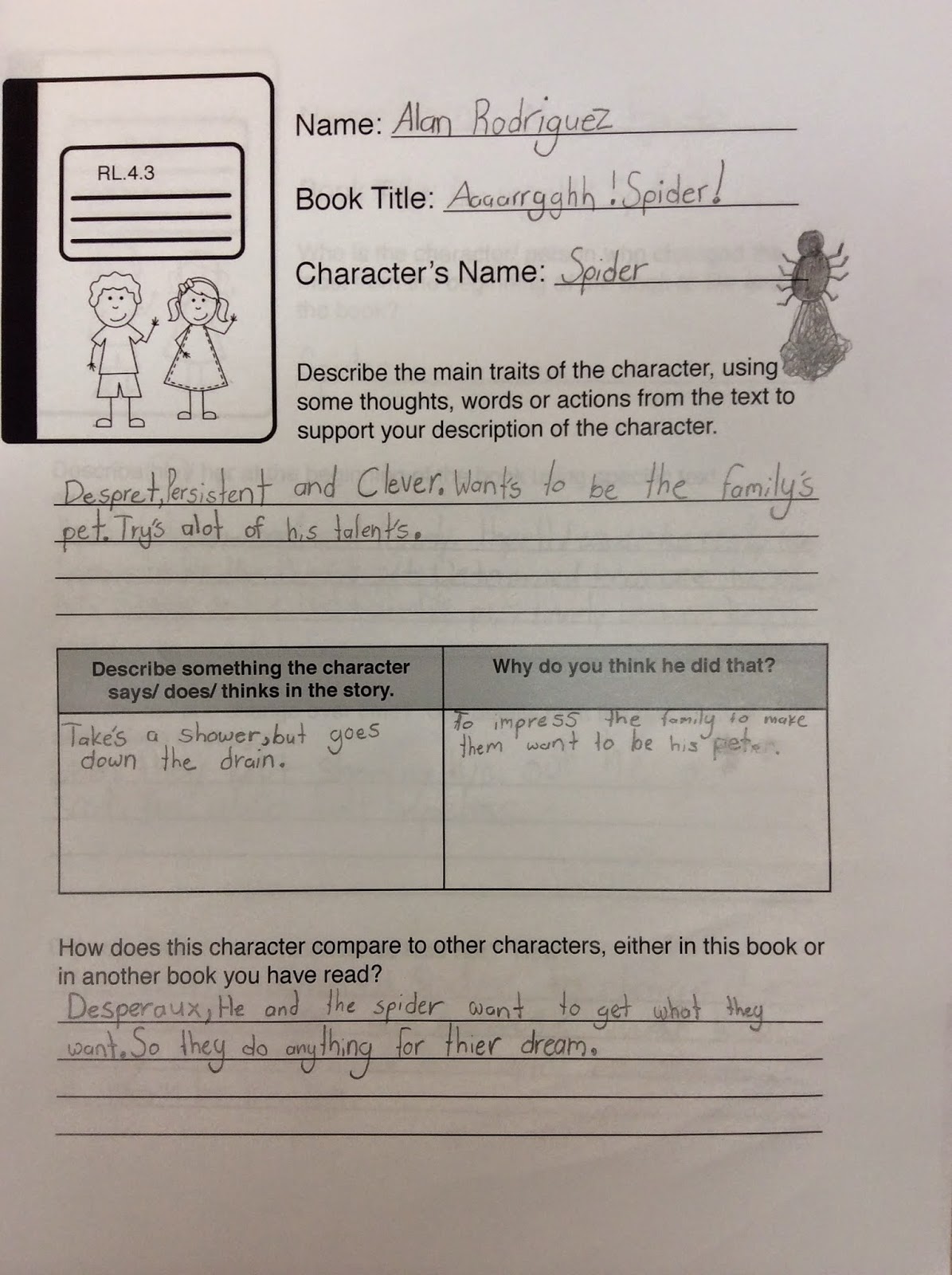
     I started the building meeting reading the story, Aaaarrgghh, Spider! to the teachers.  It is short, and they really couldn't analyze the quality of the students' work if they weren't all familiar with the text.  

     After they read the story, I went through a brief PD on open and closed sorts.   I then asked the teachers to do an open sort of the work done by students in their grade levels.  They could sort the work into any categories that they wanted.  The work began!


     After about 7-8 minutes, we came back together as a group and talked about the process.  I had walked around and listened to the groups as they sorted, and every single grade level chose different categories to sort the work into.  Some did it based on completion of work, others based on if they used text evidence or not, some on overall quality, etc.  Not one team mentioned the work common core standard.  Many of the teams disagreed on what they wanted to sort them as, and therefore didn't have categories in place at the end of the time period.

     I then passed out a rubric that I had made last year about Standard 3 and character development across the grades.  For the second sort, I asked them to use a closed sort, with the four categories below, approaching, meeting, and exceeding the grade level standard of CCSS #3.  They were to use the rubric and the work samples to categorize them.  They got to work, again!


     This time, they all had categories in place and got to sorting the work.  Some chose to sort the sample to reflect the entire page of work, and others chose a single question to focus on while sorting.   I don't think any grade level finished sorting all the samples, and I think it is fair to say that there was still some disagreement about what samples fell into below, approaching, meeting and exceeding.

     So, why do all this?  We spent 30 minutes sorting one written response to a read aloud.  It wasn't even really the best activity to sort in the first place.  Why on earth would we do that?  Well, I think the conversations showed that we do not all have the same "bar" in our minds when we talk about what is expected of the students in our classes.  To be be fair, that "bar" has changed significantly in the past few years.  It is hard for any of us to know for sure what a 2nd grader or a 4th grader should be able to do anymore.  That is why we need to talk about it.  We need to collaborate with each other, and learn these new standards together.  That is the only way that we can ensure that all the students in our building are getting the same education, no matter the room they are placed into.

     I feel like teacher time is extremely precious and limited.  I want to maximize the time we spend together so that it makes the most impact it can on student learning.  The reason I had them do the open sort first, and then the closed sort with the Common Core standard focus, is because I wanted them to see how much more we can accomplish with a clear lens in our mind.  When we collaborate with others, we all bring our own ideas to that conversation.  If we don't focus the conversation in the first place, we might spend a lot of time talking and not a lot of time getting anything done.  The standards can give us a focus that can preserve our precious time.

     Are you curious what we found to be "meeting" in the grades?  Here are some samples.
Kindergarten
1st Grade

2nd Grade

3rd Grade
4th Grade
5th Grade
     This is clearly just a beginning for our building to start to use the students' work to drive our instruction.  We have a clear shorthand in place, though, for common understanding at looking at our student work samples in a range of abilities.  In fact, in the weeks following our building meeting, our ELA plan times began to fill will conversations about the quality of student work along this continuum.  We are beginning to see where they are, and allowing that to help us move to the next step.

Yeah, Hiawatha!!!

1: Below
2: Approaching the standard
3: Meeting the standard
4: Exceeding


Aaaarrgghh! Spider!: A CCSS Anchor Standard 3 Ladder Activity (Part 1)

Saturday, October 25, 2014


     October is here, and that means that I am reaching for one of my favorite books, Aaaarrgghh! Spider! by Lydia Monks.  It is the season for all things creepy and crawly, and a fun book about spiders fits that description nicely.

     Our staff has been working hard at looking at student work to start driving our instruction.  For the past few weeks, we have been using our building meetings to do gallery walks of student work across grade levels, led by our core leaders +Jane DeCaire  and +Christina Betz.  We have simply been looking at work samples (K-5) and noticing commonalities and differences through conversation with each other. Next week, we are going to be looking at reading work, but we wanted to start examining the work at our own grade level more closely to help us make some decisions about where our instruction needs to go.  Time for some formative assessment analysis!

Step 1: Pick a Text

     Formative assessment is really anything that you do with students that you can analyze and use to move your students to the next step in their development.  In order to do a whole staff PD about a possible way to analyze a formative assessment, I decided to create assessments that would walk up the Common Core ladder of expectations for Standard 3.  But what character to study?!?!?

     Spider!

     I love Aaaarrgghh! Spider!  But is my love enough to read it to all 6 grade levels in my building?  Here's why it is:
Kindergarten: Next week, they are reading the Itsy, Bitsy Spider in their nursery rhyme unit.  They 
     also have the word spider up on their October word wall.
First Grade: I had talked to one of our first grade teachers about using this book to help with her 
     Small Moment shared experience story about a bug they found in their classroom.  It can be used 
     to see how some small moments are put together to make a story.
Second Grade:  Our second grade is currently working on adding onomatopoeia and dialogue to 
     their small moment stories.  "Aaaarrgghh!" and "Off you go!" fit perfectly into those lessons.
Third Grade:  Our third grade is currently reading Charlotte's Web.  What better spider to compare 
     than Charlotte?  They even call Spider clever for making her webs, just like Charlotte!!!
Fourth Grade:  They are currently reading Tales of Despereaux, which is about a mouse who doesn't 
     have a family that supports him.  Guess who also doesn't have a family?  Spider!  
Fifth Grade:  They also just wrote a shared experience small moment story about Haunted 
     Hiawatha. Their writing samples were filled with onomatopoeia, and filled with fear (even if the  
     fear in Aaaarrgghh! Spider! is on a much friendlier level...)

Step 2: Create the Assessments

     Once I had a book in mind, I opened the Common Core rubrics I made for Standard 3 across grade levels and really thought about what would be expected of our students to do with the book based on the CCSS.  I then opened a blank Pages document and got to work.  The assessments I made focus on key components of the grade level standards, but are certainly not complete and can be measured in other ways as well.  But, for the purpose of my assessments, they reflect the work of the CCSS standards across each grade.

     Here are the assessments.

Step 3: Go into the Classrooms!

     I then went into one classroom as each grade level in my building.  Thanks, +Kara Wesolowski, +Jodi Meyer, +Margaret Daly, +Christine Flowers, +Lori Horne, and +Katie Cardelli for letting me come in to read to your class!  

     I started by walking them through the character assessment, using a character that they have been following in their read alouds.  Using No, David, Arthur, Charlotte, Desperaux, and Rob from Tiger Rising, we had a brief conversation touching on the kinds of character analysis that their standards expects by the end of the year.  I used a familiar character to set up the expectation, and then told them that they were going to do the same work using a new character.  Enter Spider!

    Once the kids were working independently on the assessment, I did leave them alone to work and their teacher and I took some time to talk about the questions I used on the assessment, and to start to look at the early responses as they came in.  This gave me some time to talk through my rationale for the assessment so that the teacher could lead the sorting for their grade level at our building meeting. I also didn't want to offer the kids too much support, because we are going to sort it into categories to help us guide our instruction.  If I provided a lot of support, it might skew the sorting and cause a child not to get the feedback or support they need.

     Here is a video of me reading the book.
(I made the video so that the staff who didn't hear me read it would be able to listen to the book before our meeting.  My kids helped me out, and the mic went in and out, so it is not Grade A quality, but it is helping me flip our meeting a bit.)

Step 4: Sorting the Work

     The whole point of doing this was to collect samples that the teams could sort.  That will be covered in Part 2, sometime after our building meeting next week!

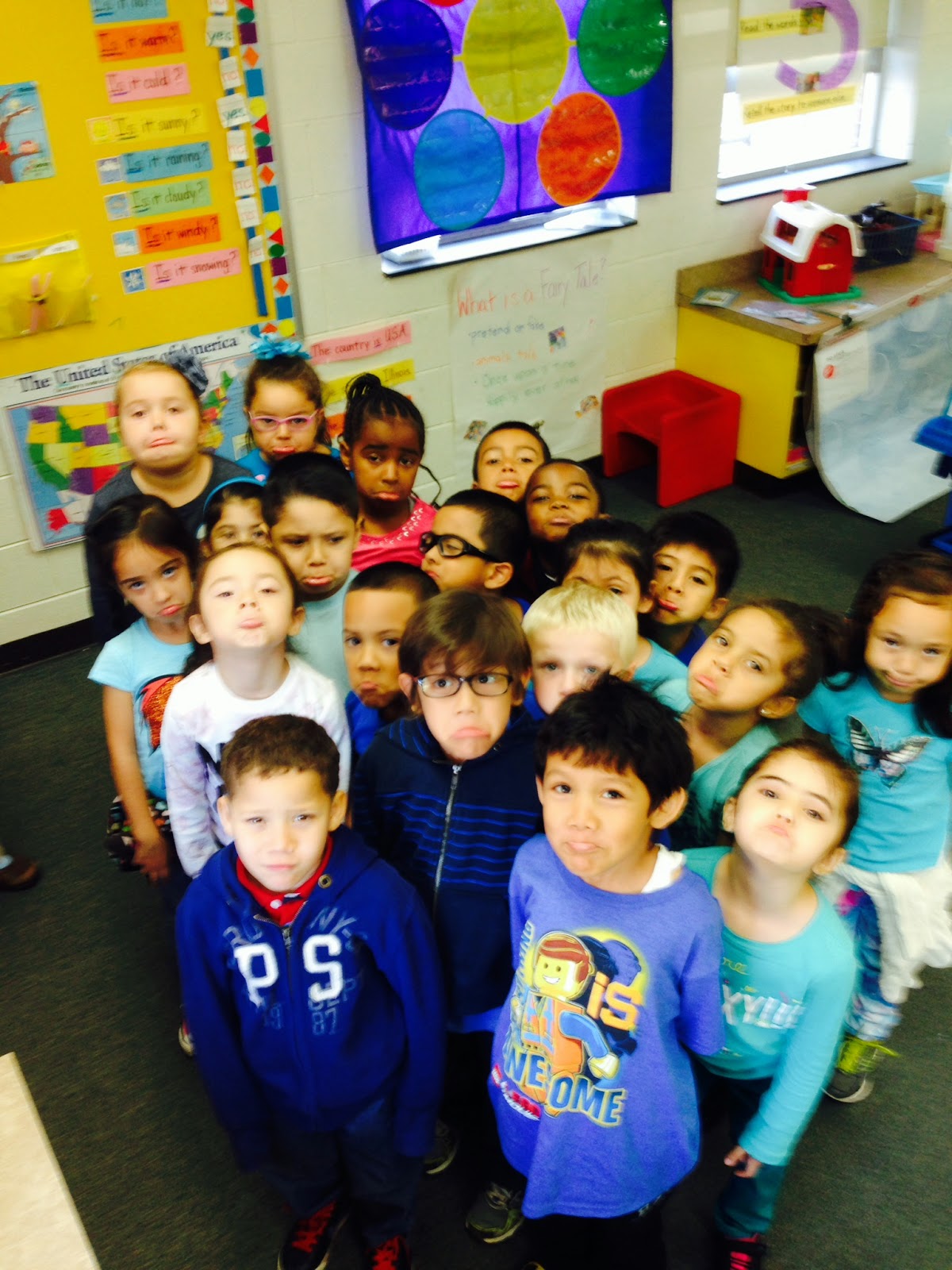
     Stay tuned for completed work samples and thoughts about sorting student work into categories in grade level teams.  Until then, here are some pictures of our cute Hiawatha kindergartners showing us the emotions felt by Spider at three points in the book.  


Feedback is...

Friday, October 24, 2014

     We keep hearing that word... Feedback.  But what is feedback?  Is it a "Great job!" or a high five after a job well done?  While we all want positive compliments and praise, feedback is a little more that that.  I have been collecting ideas from Twitter posts and blog entries that I have read, and decided to compile them into a quick list to help me better define what good feedback can be, both to students and staff members.

Feedback is...

  • timely, relevant, and action oriented (John Hattie)
  • personal and fast!
  • not about the person (as a person)
  • given during lessons, or very soon after
  • practical
  • a resource that allows students to take active steps to advance their own learning (Margaret Heritage)
  • non-evaluative
  • related to learning goals
  • an opportunity to revise work and deepen understanding
  • a teaching opportunity
  • collaboration, not correction
  • a formative assessment
  • not advice
  • information that includes what works and why
  • not praise
  • not about right or wrong
  • feedback towards the summative assessment (Wiggins)
  • based on student strengths
What am I missing?  Leave me a comment and let me know!
RISE Model by Emily Wray

Anchor Chart Walks

Sunday, October 19, 2014

     Every other Friday, I like to take a walk around my building and snap pictures of all the new anchor charts up in the classrooms.  I start in kindergarten, and make my way to 5th grade.  I take pictures of reading and writing charts, as well as math charts.  I then upload them all to Google and put them in a gallery that I share with my staff.  I have 2 goals in doing this every other week.

1.  The teachers in my building get to show off their charts, and give ideas to us all.  It is like going to Pinterest, but all the charts are Hiawatha's own.

2.  My primary reason is to give the classroom teachers a glimpse into the instruction of the other classrooms in our building.  It takes a village to educate a child, but we don't often get to see what everyone else is working on.  This gives them a glimpse into the learning going on down the hall.

This week, I wanted to give some shout outs to some things I was extremely excited about.

Character Traits with Mentor Texts!


     I was really excited to see that many of the anchor charts that involved character traits/ feelings included real characters!  Last year, we made a lot of charts with lots and lots of traits listed.  The kids, however, didn't really know what they meant.  Their limited vocabulary left them confused at what some of those traits really meant.  This year, by introducing the traits through characters, the traits they used will be a lot easier to transfer because they have a reference to compare it to!  Some of the charts were from novels the class was reading, and some were just from a read aloud from the week, but all are specific to real characters in real books!  

Experience Charts!


     Many of our students lack the life experiences they would need to really use a wide vocabulary when writing.  Our first grade classrooms solved that with doing their pumpkin writing after taking a trip the the pumpkin farm.  Not only did they go on the trip and take pictures of their adventures, but they also carved a real pumpkin to generate adjectives to use when writing.  The first graders generated those words all on their own, with a little help from a real pumpkin and some great teachers!  I can't wait to read their writing samples!

Learning Targets!


     OK, this one might be cheating.  But, boy was I excited when I saw this.  It isn't really an anchor chart, but I will throw it in anyway.  This first year teacher (yep, first year!) writes her Learning Targets each day and the class reads them at Morning Meeting.  Not only does this help those little first graders prepare for the day, but I am sure it helps Ms. LaFleur remember exactly why she is teaching what she is teaching every day.  That little bit of thought about targets can really make learning purposeful.  

Craft and Structure Examples!


     Our students have traditionally struggled with the craft and structure Common Core Standards (4-6) when given the F&P test, as well as in reading and writing workshop.  This anchor chart in Ms. Cardelli's 5th grade not only gives students some real examples of how to show, not tell when writing, but it also gives them a little checklist for students to look at when they are drafting.  Perhaps the examples will also help them pull out language from the books they read independently as additional examples, too!  

Check out the rest of of fabulous charts here!


I am a Fictional Character

Friday, October 10, 2014


Wow.  I just posted a selfie on my blog.  I must feel really passionate about character...

     I just got home from IRC this weekend, and I just couldn't wait to wear my new shirt from Anderson's.  Yep, I am a "fictional character," and proud of it!

     Last year, after a few of our grades finished teaching the character Unit of Study, I realized that we hadn't really thought about why we teach a whole unit on character.  I think in the classrooms of the past, we used to quickly "list" the characters as one part of completing a story map.  Perhaps we had a conversation about what they did, or predicted what they might do in the story.  In the classrooms of today, we spend at least a month on characters, because Lucy Calkins tells us to.  Plus, it is Standard 3.  Right?

     It was in the middle of the unit, though, that I really began to think about the purpose for teaching our students to walk both in the character's shoes, as well as outside of them.  I began to realize that our students do that all the time on the playground, and in the lunchroom, and in the halls.  They are constantly aware of others and how they feel and what their motivations are.  As a recess supervisor, I can tell you that they know exactly why little Bobby pushed them, or why little Suzie is crying.  (Or, at least they think they do...)  They notice when their best friend goes from their best friend to their worst enemy.  They see the changes in their behavior.  So, why it is that they don't notice these things in books?  Is it because these concepts are too hard?  Should we not expect them to notice traits, and patterns of behavior, in book characters?  Is this just another example of the Common Core expecting too much?

     If our kids can apply the standard to real people on the playground and in their life, then they can do it with books.  They just need to care about the characters in their books a little bit more.  And they need us to model it.

     Real people are characters, just like their fictional counterparts.  They just matter more to us because they are real and in our world.  Perhaps if we can get our students to see book characters as "people," we can teach them to become better people themselves.  If we can get children to see book characters, and think about their traits and their behaviors, and even consider their motivations for doing what they do, then perhaps they will learn a little about the world around us and it will change them for the better.

Wilbur taught me that friendship means everything.

Rocky Balboa taught me that being determined to succeed will help me succeed.

Harry Potter taught me that even when horrible things happen, my actions can do good and help others.  

Gerald teaches me that even when we are frustrated and nervous, friends will get me through it despite my own attitude.

David taught me that being impulsive and silly can cause some problems, but that people will forgive me if I apologize.

     The truth is, these book characters taught me lessons that I can use in my own life.  The book might have been about them, but the character traits, big ideas and themes could have been written for me.  We are just like those characters in the books we read.  Perhaps, if we learn lessons from them, it can help us from making mistakes in our own world.

     I think I learned those lessons from the characters above not only because of their actions, but also from how other characters responded to them.  Our children struggle with that.  They tend to see things only from their own perspective.  Perhaps "walking in their shoes" a little more will help them see things in a different way.  Right now, they can only be the character if the character becomes them.  With practice and modeling, perhaps they will really be able to see what it would be like to live the life of another person (at least long enough to have some empathy and understanding).

     I am Leah O'Donnell, and I am a fictional character.  I have traits that change over the course of my life, both internal traits and just plain emotions.  Those traits do determine how I respond to things, and sometimes I act out of character and really struggle.  I am motivated by many things, and sometimes it is hard for me to see that.  I am living proof that Standard 3 matters.

(...and I am not talking about the "do go on the PARCC, multiple choice" Standard 3 that matters)


5 Powerful Questions

Monday, September 29, 2014

     Edutopia had a great blog post about asking simple questions that can get deeper responses from our students.  Here is a link to the complete article by Rebecca Alber.

Here is an excerpt from the article:

#1. What do you think?

This question interrupts us from telling too much. There is a place for direct instruction where we give students information yet we need to always strive to balance this with plenty of opportunities for students to make sense of and apply that new information using their schemata and understanding.

#2. Why do you think that?

After students share what they think, this follow-up question pushes them to provide reasoning for their thinking.

#3. How do you know this?

When this question is asked, students can make connections to their ideas and thoughts with things they've experienced, read, and have seen.

#4. Can you tell me more?

This question can inspire students to extend their thinking and share further evidence for their ideas.

#5. What questions do you still have?

This allows students to offer up questions they have about the information, ideas or the evidence.

Simple Questions for great responses.  Perfect!
When I thought a little more, though, I realized that those simple questions do not have to be just for the students to answer.  So often I have conversations with teachers about what they "need" to do.  Somewhere, somehow, our classrooms can become run not by the students and their needs, but by the fear of pleasing others.  
So, I ask you, as the teacher...

What do you think?

Why do you think that?

How do you know this?

Can you tell me more?

What questions do you still have?

I have one more that I would like to ask, though.  Here is one that could work with the students, too, but it might be harder for them.  Here goes:

Is it reasonable? (or, restated... Could it be possible?)


We make so many excuses every day.  Just today, I made excuses about going to the park because it was TOO HOT.  Here we are, at the beginning of October with an 80 degree day, and I told my son and daughter that it was TOO HOT.  Shame on me.  It was totally possible.  But I was tired, and was exhausted.  It was easier to say "no."  It should have been possible.  


Reflective Vs Responsive

Saturday, September 20, 2014


     Here we are, gathered together on the internet again, this time at Responsive Literacy (rather than Hiawatha Literacy for Teachers).  To be honest, I have a google site that is also named Hiawatha Literacy, and there was just too much confusion about which one I was referring two with both being named the same thing.  So, it was time to make a change.

     I have always said that I am a reflective teacher.  I almost reflect too much, in fact.  It seems like every decision I make I feel I need to justify or apologize for, or even blog about.  I think too much.  So I  looked up the word reflect recently in the dictionary, and the above definition was what I found.  The first part of the definition, "to throw back heat, light, or sound without absorbing it," confused me a little.  How does that definition make any sense?  When I reflect on the choices I make, I most certainly absorb them.  I suppose it is the 2nd part of the definition that I was expecting, "to think deeply or carefully about" something.

     Upon deeper reflection, perhaps both parts are indeed needed.  While the first part refers to seeing yourself in the mirror, or reflected on the water at a lake, it is true that those things do not become part of who we are.  They are merely just allowing us to see things from a different perspective.  Perhaps we need to see those reflections of the things that are actually there before we can think really deeply about anything. 

     Why the reason for these deep thoughts?  Well, I can't name my blog Reflective Literacy if part of that means to just bounce something back.  Plus, maybe I need to do more than be reflective about literacy.  Perhaps it is time to put those reflections into ACTION.

     Responsive, by definition, means:

     That's what I want to be!!!  Responsive!!!

I want to not only reflect, but do something about it in a timely manner.  (That can be a big weakness of mine...)
I want to be positive with my actions.
I want to answer the needs that others have, not just add to them.
I want to be responsive, in both my literacy coaching, but also with my family.


      So, welcome to Responsive Literacy!  If you previously bookmarked my blog, please change the address because I have found a new name!