Hacking Homework: Hack #2

Saturday, November 26, 2016

     "The sole purpose of homework in 2nd grade is to teach responsibility."
      -L. O'Donnell, 1999

     That is a direct quote from me, during my first year teaching 2nd grade.  I used to say that to parents a lot, because I wanted my students to do their homework, and turn it in by themselves.  Part of me still believes in the value for 2nd graders to learn how to do work independently, and turn it in the next day. I always tried to keep the homework to 5-10 minutes, and it was always something they could do in independent review (or at least I told myself that...).  I never graded homework, and it never affected a child's grade on their report card (except for the box that asked if they did homework).  So, I felt like it was ok to use homework as an exercise in responsibility.  I don't think I harmed anyone in the process, but I wasn't sitting at their kitchen table every night either...

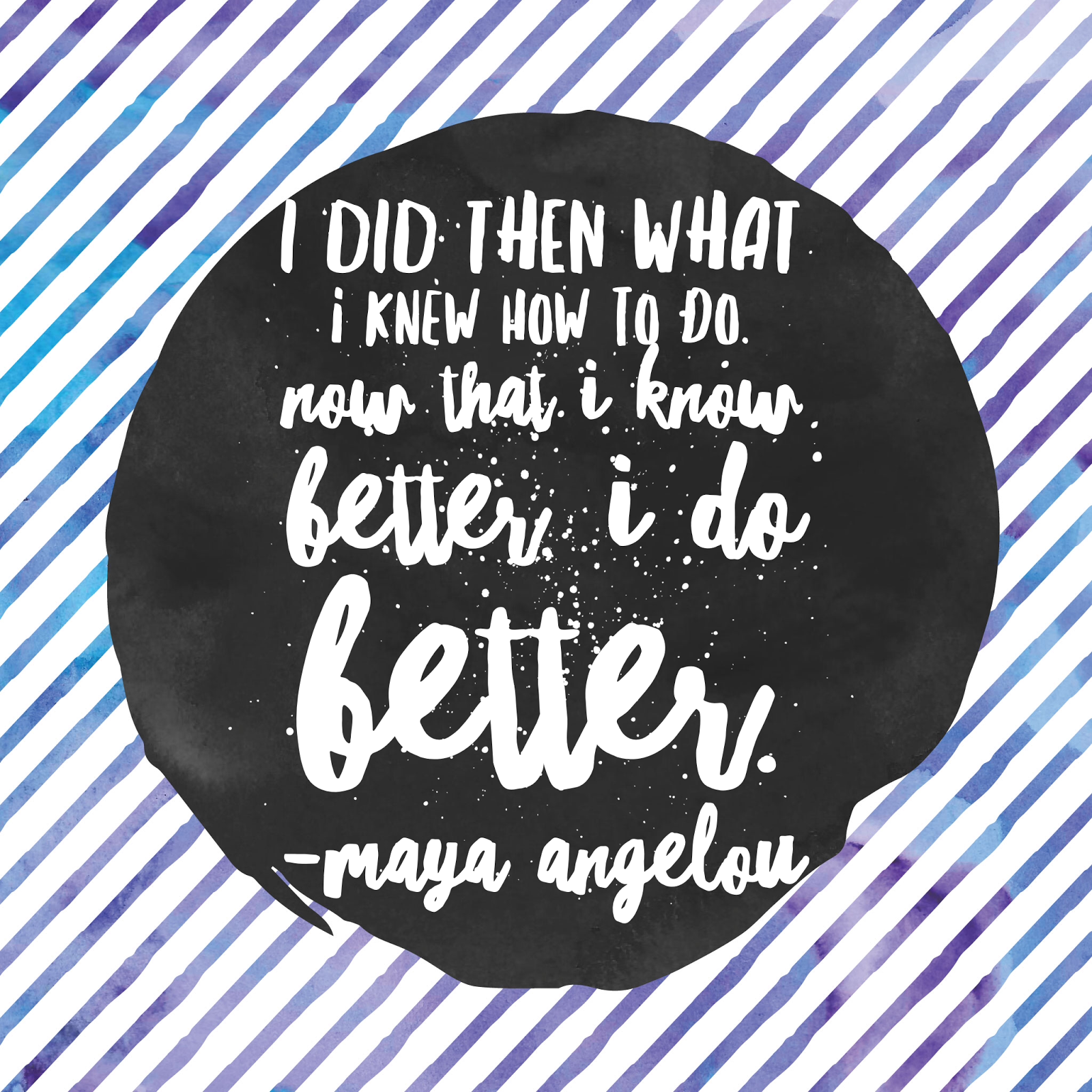
When we know better, we do better.

     The last few years I taught in a classroom, my perspective started to shift a bit.  There were a few students who almost never did their homework, and when they did they would never turn it in independently.  It's like they were begging me to re-evaluate my purpose for homework, and they did.  For those children, I began to realize on a daily basis that they did not have the supports in place at home that would make it possible for them to be successful.  They also didn't have the behavioral supports in class to be organized.  I started to realize that the kids who were "independently" doing their homework had parents who built time and routines in at home, and who sometimes even contributed to their homework.  Yes, I can tell the difference between an adult's writing, and a kid's writing.  I had seen it happen for years, but I guess I never really thought about how that impacted my statement that "the sole purpose of homework in 2nd grade is to teach responsibility."  Who's responsibility was I testing?

     Things have come full circle now.  I am the parent of a 1st and a 2nd grader.  One of my children comes home and gets started right away, because she is "responsible," but if I don't sit with her her homework is sometimes too challenging.  My other doesn't do it until we tell him too, and he can do it independently for the most part, but would never actually put the finished work in his folder without the reminders.  He is not "organized" or "responsible" by most definitions.  I don't think his homework alone is going to teach him to be both of those things, either, but the homework certainly has gotten easier the more he embraces those traits.


    In Hacking Homework, Starr Sackstein and Connie Hamilton talk about how simply giving homework does not magically make students responsible and organized.  They are skills that need to be taught and reinforced over time.  Homework could be a positive factor in that, or a negative factor in that.  But, the bottom line is, assigning homework does not directly result in organization and responsibility.  Those habits need to be taught, modeled, and reinforced constantly.


     Flash forward to today.  We are putting up our Christmas tree, and we need to clean up some toys before that can happen.  I found myself cleaning.  Yep, not my kids, but me.  Then I read Hack #2.   Every night I model responsibility with homework because we sit down and do it, but cleaning up our toys does not happen every night due to time.  Homework.  Dinner.  Bath.  Bed. Repeat.  But what is more important?  The life lesson of putting a worksheet in a folder, or cleaning up our messes?  In the day to day world, we don't always have time for both.  That is a parent fail, and I own that.


    Today, we sorted LEGOs.   I might not be #HackingHomework, but I certainly can reinforce learning traits and transfer them to things we do at home.  Let's hope this helps my kids keep their desks cleaner at school, too.  My hope is that some day, it becomes the norm at home too.  But, there is no magical wand (homework) that we can wave to teach responsibility.  I wish someone had told me that in 1999 when I got the keys to my first classroom...

     If you are interested in learning more about #HackingHomework, please join our Voxer group!  Colleen Noffsinger and I would love you to join us.  Here is a schedule for our upcoming conversations.

Illinois Reading Council 2016

     One of my favorite times of year has come and gone again... The annual Illinois Reading Council conference was once again an inspiring event where I learned a ton, and took a lot of literacy guru selfies.  :)  Check the Twitter feed #IRC2016 for more tweets.

     I started writing this post, but then realized I never published it.  So, I am going to just share my #sketchnotes from the sessions I attended and call it a day.  One word synthesis: Inspiring!  My general, overall thoughts?  Writing matters.  Model it, use books as a model for it, and be a writer yourself.  Non-fiction has so much potential for reading and writing, and we really need to think about how we teach it to our kids.  Images and visuals in books and our writing matter.  Literacy matters.


@amybender8


@writeguyjeff


@KyleneBeers @BobProbst
(I always misspell her first name, because our PE teacher is a Kyleen.  Ignore the handle on the #sketchnote.  Her real handle is @KyleneBeers)


@debbiediller


@writeguyjeff


@ReadDRjwilhelm


@maestracarrera @leahod
(I had the honor of presenting this session with the lovely and talented Lucy Carrera.
Thanks, Lucy, for your inspiration!)


@LynMullalyHunt


@FletcherRalph


     For those of you who know me, I am a self proclaimed literacy nerd.  In fact, I like to take selfies at reading conferences.  I mean, who doesn't?  The truth is, I like to go up to people who inspire me, and tell them that they inspire me, while posing for a picture with them.  I figure it really helps me synthesize the influence others have on myself and my students, and shows a little gratitude for their dedication to our professional field.  So, here are my 2016 #litguruselfies!
@writeguyjeff
@KyleneBeers
@BobProbst


@LynMullalyHunt
Many of the D100 ELA Squad with @FletcherRalph

                       
@FletcherRalph
@ReadDRjwilhelm

Hacking the Common Core: Embrace the Novel

Tuesday, October 11, 2016


     The #d100bloggerPD crew is doing a blog study on Michael Fisher's Hacking the Common Core, in the #HackLearning series.


     The last 2 posts in the #d100bloggerpd series were written by fellow Hiawatha Husky +Kayla Kaczmarek last week (check it out  here) and by Freedom Patriot +Lauren Slanker (linked here).


     This hack started off with a quote (which I love) by Maya Angelou.  There are so many things that we do because we have always done them, not because they are in the best interest of the kids in front of us.  But, sometimes we change things just for the sake of change, and there really wasn't a need for something different in the first place.   The novel study seems to be in the middle.  When I first read the title of the hack, I was thinking this chapter would be more about the power of a novel as a read aloud, in addition to guided reading and strategy groups.  What it turned out to be was more of a chapter reminding us of the importance of literature in general.  In the elementary schools, I don't think we have forgotten fiction.  We have just added more informational texts, perhaps not even enough when it comes to read to self choices.  Kids in the upper grades still choose to read fiction, if given a choice (and maybe that is ok).

Hack 5: Embrace the Novel

     No, this is not a post where I tell you that it is ok to read a novel that does not fit the needs of your kids, has the teacher do all the actual reading work, and is picked because of a Teachers Pay Teachers packet.  I just want to be clear about that.  The one size fits all novel where that is the ONLY reading is not my intended message in "embrace the novel."  That brings me back to my own school experience, where the teacher spent MONTHS on a book that she loved, and did all the work.  The only reading that I did was the Cliff Notes version of the novel before the test.  There.  I said it.  This lit coach used to cheat on novels.  I was a busy teenager, with teenage things to do.  The Cliff Notes told me everything that I needed to know, anyway.

     As Maya Angelou said above, "now that I know better, I do better."  ELA instruction is not about getting the kids to says the things that YOU think are important in novels anymore.  It is about having the students realize they they as readers have their own ideas about text, and that they can share those ideas with others and GROW them into even bigger ideas through conversations and written response. Gone are the days where we want the students to say that the rose is a symbol of love, and here are the days where students name the symbols they themselves see as readers and explain their reasoning, with text and their life experiences in mind.  I don't think the Cliff Notes would have helped me with that...

     I have been a proponent of using a good novel to tie instruction together across the day for years.  As a literacy coach, I have seen how a great read aloud has tied together all the pieces of Balanced Literacy and created an environment where learning just multiplies in the room.  Here is a post I wrote a few years ago explaining how our 5th grade used The Apprentice to tie their day together.

     Michael Fisher discusses how in the Common Core they shifted the balance of literature and informational reading in the classrooms.  In primary grades, it's now 50/50, with the end of high schools shifting to 70/30.  By the time they get to high school, reading across the day should have an informational focus, but that doesn't mean that ELA teachers are the only ones who have kids read.  The 70% was intended for 12th grade students.  There is no reason to remove literature from the curriculum as we go up in grades.  In the middle and high school grades, Fisher suggests that we "spread responsibility for balanced reading among all teachers in the school."

Basically:
  • All teachers should support literacy, in reading, writing, speaking, or listening.
  • Informational reading across the grade should be integrated across content areas.
  • Do not eliminate literature from the curriculum.
  • Enhance the understanding of literary texts (like novels) with supporting informational texts.
     Michael Fisher also knows that professional development is critical when making these changes across our instructional day.  He says:
Schools often benefit from having a literacy coach on site.  This is a person who can provide ongoing feedback about balanced literacy, content literacy, the connections between reading and writing, and curriculum help to integrate literacy seamlessly into any content area.
      I like this guy!

      In all seriousness, my work as a literacy coach has diversified quite a bit since I started in my role.  While it started just unpacking reading standards, it quickly turned into unit planning with backwards design and content integration, horizontal alignment of reading and writing, and vertical alignment across the grades.  This is NOT the type of work that can be done quickly, and I have come to really enjoy the collaboration with teachers every week as we build relevant units for out kids.  I love my job.


     Fisher talks about assessing the the texts that you use, and how you use them.  Text complexity is NOT just a lexile, or an F&P letter.  Background knowledge is so important to many texts above a P/Q, and that has to be considered.  How teachers use a text, and the supports they provide while reading it, also drastically change the way a book is understood.  Using a novel as a read aloud, with front loading of setting if it is a different time or place, and use of accountable talk or sketchnoting, can make a text more rigorous and released to the students.  That just happens to be my 2 cents.  :)

     Fisher also talks about letting "Dorothy return to Oz" and bringing literature back to the ELA class, but not necessarily just teaching the same novels you have always taught out of comfort.  When I was in 7th grade, we did a unit on The Outsiders.  The middle schoolers in my district still read The Outsiders today.  I have a feeling, however, that the way they teach it is very different from my days in 7th back in the early 1990's.  Good books transcend time.  Good teachers modify the instructional delivery, and use resources that support them and their students.

     As soon as I close this post, my computer will be turned to writing a novel unit on Ghosts, by Raina Telgemeier, in collaboration with +Tyler Haar.  He noticed that his students LOVE graphic novels, but weren't quite reading them as rigorously as traditional novels.  He also discovered that Ghosts celebrates Hispanic culture, which is something we want to promote more at our school.  So, we are adding a new novel into the read aloud mix.  It will hit Common Core Standards, and it will add content and culture, and it will MATTER to his students.  Literature has the great possibility of showing students where they fit into the world, and that others struggle and overcome in the world as well.  Embrace the novel.  Create people who see other people, too.


     Just  remember, as we integrate the Common Core and content areas into literacy, do it carefully.  If we are intentional and purposeful, we will see the benefits of the novel in our students.  I see novels as windows to the world.  Let's open the windows up in our ELA classes!


The next post in the #d100bloggerpd series is up tomorrow!
Diona Iacobazzi will share her ideas about 
Hack #6: Prioritize on http://thebazzblog1.blogspot.com!


The Ed Collab Did it Again!

Saturday, October 1, 2016


     It was a beautiful Saturday morning, and my kids were at their dance class.  This week, they got to invite their 3 year old cousin to join them!  It was adorable, and funny, and awkward, watching my 3 year old niece dance in the big kid class.   It was enough to distract me, at least for a little while, because a little voice in my head kept saying, "You are missing the intro to the Ed Collab Gathering."  Sadly, their studio does not have wifi.  Thank goodness those #tinydancers put on a great show.

     The truth is, I have really come to enjoy the twice annual gathering put on by the generous educators in The Educator Collaborative.  Free PD in my pajamas (usually), given by top rate educators!  A PLN dream come true.  :)  Here are my previous reflection posts:

Spring 2016

For links to watch this year's sessions, please go to the gathering page on The Ed Collab's website.

     I was able to attend 4 sessions live that day.  Here are my sketch notes, and the Twitter handles of the presenters.  Please follow them!

@ClareandTammy
@iChrisLehman
@pernilleripp
@amiraoa
@TannyMcG
@ShawnaCoppola


     I did not end making sketchnotes for the last session.  I use sketchnotes to synthesize the important ideas as I learn, and the last session was really more about inspiration.  We heard from educators from around the world who are are under 30 years old and have already made dramatic enhancements to the education field.  It was inspiring to hear about their work, and made me think about the impact that I can have on students going forward.

     I was honored when Clare and Tammy asked later if they could make my sketchnotes of their session as their Twitter cover photo.  The ironic part of that is that I had been inspired to sketchnote a year earlier by Tanny McGregor, whose session with Shawna Coppola earlier in the day had been about sketchnoting too!  I had seen her post on her blog post (here) in December of 2015, and I had just started digital sketchnoting at conferences a few months earlier.  It was her post that inspired me to buy a journal and do it as I read novels, too, that has inspired me to see the true benefits of sketchnoting with pens and with a stylus.  Thanks, Tanny.


     Clare and Tammy, you are an assessment light.  We need you in this data driven world.  I will be using your book and the ideas you shared with SO MANY teachers that I work with in my district.  That Messy Planning Sheet is INSPIRED.  

     Pernille and Amira, we have 5 classes at my school reading The BFG for the Global Read Aloud.  Thank you for connecting our students with the world through literacy!  We are excited to begin this week!

     Thanks again, +Christopher Lehman, for putting together such a great day of learning.  I would say, "See you again in the spring!" but I don't need to wait that long.  I am signed up to learn with The Educator Collaborative all year long.  Go to their website and check out the professional development options they have!  They are a wonderful addition to your PLN. 

Warm Fuzzies

Friday, September 2, 2016


     One of my favorite teachers ever was my 2nd grade teacher.  She used to give us "warm fuzzies," which were cotton balls with a positive statement glued to them.  We would collect them for doing kind things, and earn class prizes.  I'm pretty sure cooking was one of them, even though I'm sure we weren't top chefs back then.  I still remember it.  

     When I graduated college and got a job in 2nd grade classroom of my own, I also made "warm fuzzies" to pass out to my class.  Some lessons last a lifetime, I suppose.

     Now, I'm a literacy coach without a classroom of my own.  I walked into +Kayla Kaczmarek's 1st grade to deliver a book she requested on kindness.  Little did I know that she wanted to read it in their morning meeting to introduce "warm fuzzies" to the current  generation.  This time, they were pom poms of different colors and sizes, with shiny fringe.  But, the lesson remains the same.  She is collecting them in a jar that recognizes kind acts to others. 

     Isn't it great, 30 years later, that I can say that kindness is still the focus in our classrooms?  We teach humans first, always.  The lessons that perhaps will be the most important years later are the ones where we teach our students how to be people who choose to think about how others feel, and choose to act with care and empathy towards others.  

     I still send my 2nd grade teacher Christmas cards, because she made me feel special 31 years ago. Thanks, Mrs. Lambesis, for that lesson.  It mattered.


Also, I'll share this one more time.  Teachers are models that last a lifetime.  #StayHumbleAndKind


What Teachers Make

Tuesday, August 9, 2016

     This post is in a series of #d100bloggerPD posts about What Teachers Make by Taylor Mali.  I had three different sections to read as part of our book study.


Thinking it Through: The Timeline at the Back of the Classroom

     This section is about looking at a child's way of thinking, and allowing it to guide you as a teacher.


     He talked about going through the history book in rough chronological order.  He went through each section, and the kids loved it.  But, he began to realize that all middle schoolers thought that all of ancient Chinese history happened long after everything in ancient Egyptian history.  They couldn't comprehend that they happened at the same time in history because they learned about them in two different parts of the school year.  They assumed that what they learned first happened first.

     I noticed this in our fourth grade, when they taught about the Revolutionary War and King George, and then added a unit about the Middle Ages after that.  They could not comprehend that the "kings" in those time periods were not the same king.  They were SO confused, and it made us really analyze not only the information we teach, but also how it is delivered, and how it is received.

    Mali described creating a giant timeline in the back of his class.  He made a 12 foot blank timeline, and measured 350 decades in centimeters, labeled them, and sealed them with packing tape.  The year started with a blank stretch of 3,5000 years, and he slowly added post its about the size of a stick of gum after every lesson.

     He then says:


     Does this chapter mean that everyone should make a giant timeline in the back of their room?  You could.  It's a great idea, and one that our 4th grade teachers actually started to do after we had that King George dilemma.  (They also stopped teaching about the Middle Ages, but that's another conversation.)  But, what I took away from this chapter was that Mali watched how his students received the information he was teaching them, thought about what he REALLY wanted for them to take away, and changed his teaching to make it happen.  That is way more that just making a timeline.

What Teachers Get: Presents From Parents

Hilarious misspellings, thank-you notes years later, confessions of tipsy parents at holiday parties, and the laughter of children: these are some of the lucrative benefits that are never mentioned in anyone's contract.
     Teachers never become teachers for the gifts, or if they do they quickly realize that they need to find another reason to teach.  Teaching is a work of heart, not a work of gifts.  I've had a fair share of presents throughout the years, and they all come from the heart, not matter what the object is.  He tells us about a gift certificate that he got for dinner, and how he wrote the parents a thank you letter and they framed his thank you letter and gave it back to him.  And, it kind of confused me, as it did him.

     It made me think of my favorite gift of all time.  It wasn't the gift certificate to the movies, which I loved, and it was ALMOST the Staedler pens (ok... that might be a tie).  The most meaningful gift I ever got was this:


     It is a broken music box shaped in a heart, from a student that challenged me to see things in so many different ways.  He taught me more about classroom management than any college course ever did, but he also gave me hope that teachers can make a difference to those that need the difference the most.  He was in my second grade class, and I kept in touch with him all the way through 5th, and tried once he went to middle school.  Sadly, he is also the one who showed me that sometimes, the difference we make isn't enough, but that we have to keep trying.  So, as I snapped that picture today, I remind myself that all children bring their own unique struggles, and that them sharing those struggles with us and building a relationship is the REAL gift.

Fighting Back Against the Attack on Teachers

We live in a country of unchecked greed and excess, where everything and everyone has been slowly squeezed bloodless so as to maximize earnings for a tiny fraction of the population.  Profit in the short term has come to trump sustainable and equitable long-term growth, to say nothing of environmental preservation.
     Wow, doesn't that just paint a bleak picture of our world today.  I actually looked at the publication date (2012) to see if the word "trump" in the quote was purely a coincidence or a craft move.  In either way, he said that in a world as greedy as ours, of course "the machine" would eventually set their sights on teachers.

     He takes great offense to the words "greedy and lazy" when complaining about teachers, and he goes into details explaining why those words are inaccurate.  As this blog is read by teachers, I won't even go there.  It would be preaching to the choir!  What he does say, though, is that we work so hard that we actually end up with a workweek that is not SUSTAINABLE.  That we, as teachers, are so on the opposite of lazy, that we work for free so much that we end up burning ourselves out and sometimes leave the profession because of it.  So, this year, remember to take time for yourself, too.  Sleep matters.  Your health matters.  YOU matter, just like your students matter.


     The next segment of What Teachers Make #d100bloggerpd is up tomorrow!  Make sure you stop by Grammar Momma with Amy Gorzkowski and read more!


July Blogging Reflections

Sunday, July 31, 2016

Day 31 of #btbc16
Reflections on Writing

I'm going to be honest: I didn't blog all 31 days.

Oops.

There were some PD sessions that pre-occupied my time, and then a few days in Michigan where I left my computer at home on purpose.  I made up a few of those days on other days,  but not all of them.  I'll forgive myself, though.  I *almost did it.

Instead of blogging in Michigan, I played with toys. :)
This is my family and my sister's family in Playmobil form in Michigan .
Aren't we cute?  Totally worth the unplugged time.
This round of blogging was a bit harder for me.  There is just so much going on in the world, and it really affected my thinking.  I had a hard time following the prompts at times because my mind was on other things, yet I didn't really want to share the things that were on my mind.  Writing is supposed to liberate you and allow you to express yourself, but recently I have seen too many arguments over social media between people I love.  There were a few days where I drafted posts that I just could not publish.  I suppose I am choosing to censor my own freedom of speech a bit in order to prevent arguments these days.  It makes me sad.  I guess I would prefer to express my feelings on some of these big government and social issues face to face, I suppose.  

Thanks Michelle Brezek at @bigtimeliteracy for getting me to write a bit more on my blog.  Maybe I will even write those posts that I never wrote in 2015-16 before 2016-17 begins.  Maybe.  :)