Fall #TheEdCollabGathering Reflections

Sunday, September 20, 2015


     This post has the purpose of celebrating the learning I did in my pajamas yesterday!  OK, if I am being truthful, I was showered and being a mom while I learned.  But, I could have been in my pajamas.  The Educator Collaborative, under the direction of +Christopher Lehman, held their Fall #TheEdCollabGathering online yesterday.  They had 4 sessions over the course of Saturday, with 18 workshop choices and 2 keynotes.  I was able to attend most sessions live, thanks to a rain out of a soccer game, but they are all archived online too!  Here is the link:
https://gathering.theeducatorcollaborative.com 
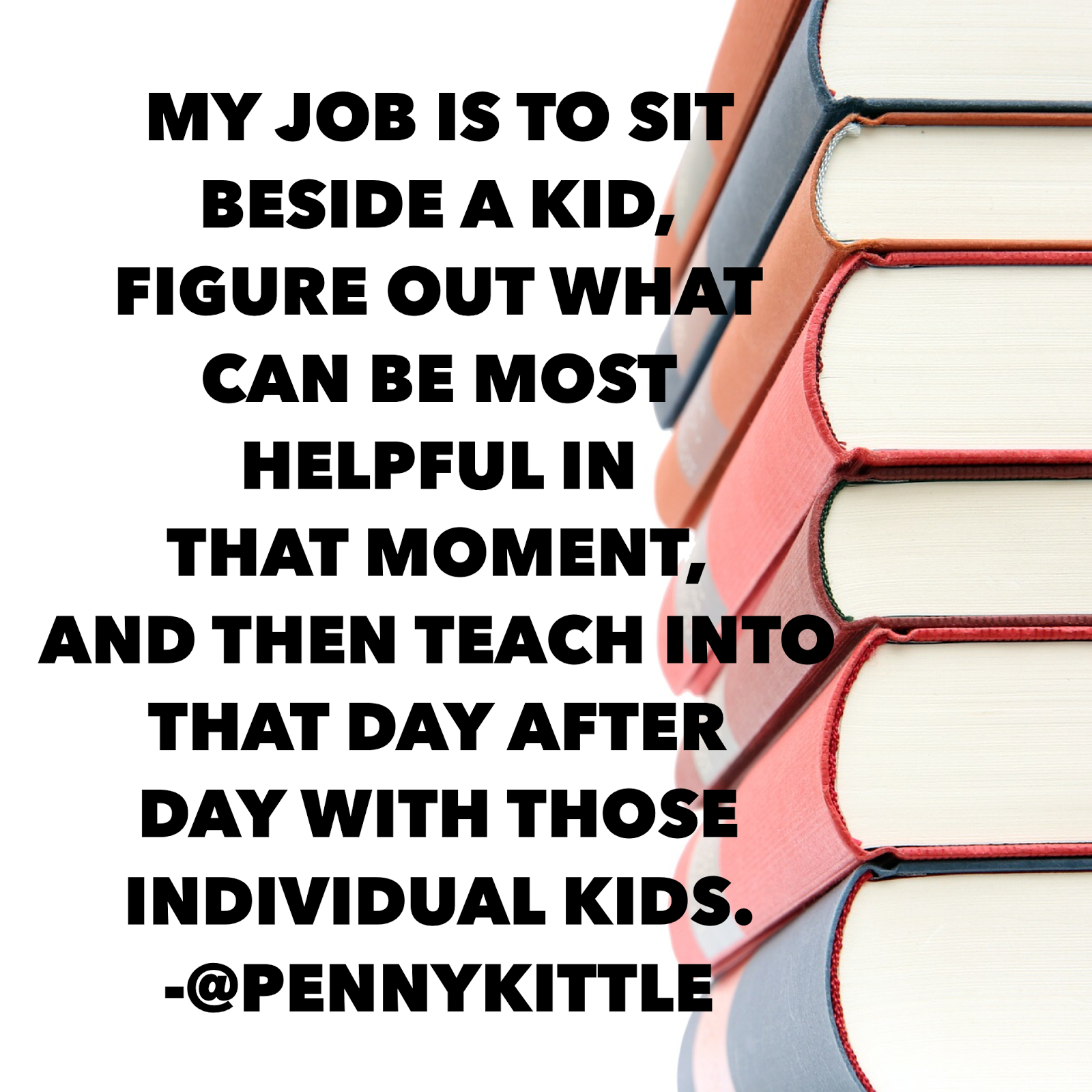

     The opening Keynote was by Penny Kittle.  Wow.  I really wish I could go back to school and be in her classroom.   She is simply amazing.  She said a bunch of awe inspiring things, but the quote above was the huge take away for me.  She talked about giving the students time to read, and getting them to have momentum while reading, and using Book Talks to gain some momentum.  But when she said that her job is to sit down with individual readers and teach them were they need to be taught, it really hit home.  There are so many things that teachers do, and somehow reading with kids seems to get bumped off our to-do lists.  As a coach, people always tell me that they don't have time to conference with students.  But, as she sees it, that is our JOB.  I need to help them find the time to confer!  


     The session by Franki Sibberson was actually about using technology in a reading workshop.  This topic interests me, as our district is 1:1, and I am actually leading a session at the Illinois Reading Council conference in a few weeks about literacy and technology.  She had many wonderful things to say, but the idea of "intentionality" that she weaved throughout was my biggest take away.  I am constantly talking to teachers about being responsive, and making choices that are relevant to the needs of their students.   We can't be intentional if all the choices are made for us.   It matters that teachers can weigh their options, either with tech programs or instructional delivery, and that they can decide which will make the difference for their students.  It matters, as well, that our students are faced with choices.  If they never have to weigh options and make decisions about their own learning goals, they can't learn to be intentional, either.  


     I would talk about my learning from Jennifer Serravallo's session, but to be honest I want to watch the archive a few more times and make a blog post about her new book all by itself.  So, I will.  Every time I listen to her speak, I find a new way to organize my brain a bit more around literacy.  She is amazing.
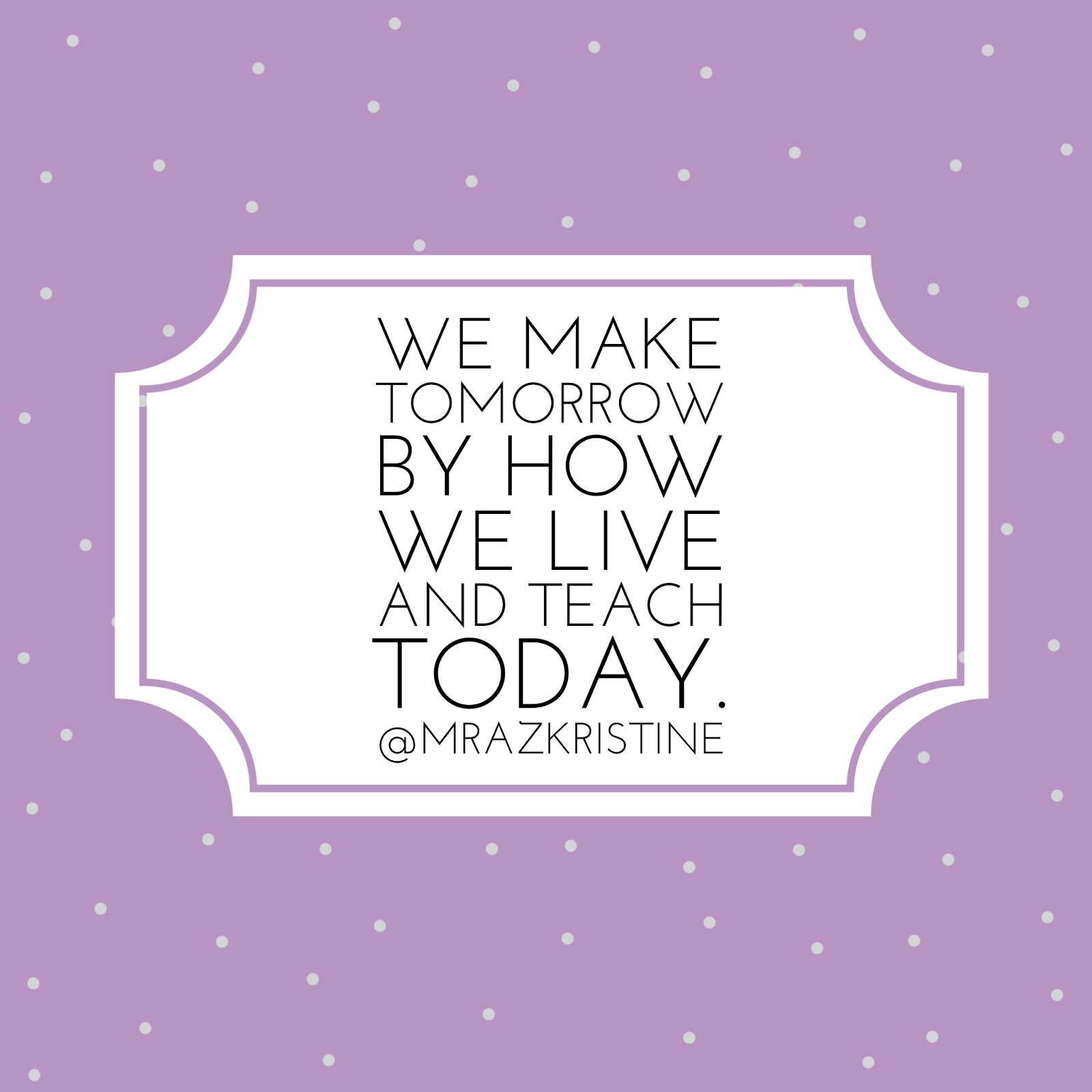
 

     The closing keynote was by Kristine Mraz and Christine Hertz.  They recently wrote a book (pictured below) that talks about how to create a mindset for learning in our classrooms.  They described the kind of classrooms that would create better humans for the world of tomorrow.  They think that by teaching empathy, optimism, persistence, resilience, and flexibility, we can actually show our students what it means to have self-control and be in control of their own learning.  They have the goal of building community, not compliance, in their classrooms.   They know that students don't always come to us with the independent skills that they need to be successful, and that it is our job as teachers to help mentor them into those skills.  As a mom, and as a teacher, my thoughts exactly!!!

     I happen to believe them 100%.  I always felt that my relationship with my students was the single most important thing that I could give them, because not all my students develop at the same pace.  If I know them, and I myself have the same empathy and optimism and flexibility that I ask them to have, we almost always came to a place where we were both successful.  

    I need this book.  :)


     I went to a few more sessions, but it is beautiful out and the park is calling my family.  So, here are just a few more people from yesterday that I would add to the people you follow on Twitter.  Your PLN will thank you!

@ichrislehman
@JSerravallo
@KristinZiemke
@MrazKristine
@christine_hertz
@MrBronke
@kimyaris
@frankisibberson
@pennykittle


Writerly Wide Awakeness

Friday, September 11, 2015


     Today, I met with our fantastic 5th grade team about their mini lessons for reading workshop for next week.  We are using the new Units of Study from Lucy Calkins, and one of the sessions is about reading with a "writerly wide awakeness."  At first glance, we considered skipping it, because the language seemed a little "fluffy."  But, upon closer reading, we realized just how valuable this lesson really is.  Basically, the teaching point is about reading with the intention of writing, so that you notice things that you would otherwise not notice while reading.  If we read a book knowing that we are going to write, we will notice the details more and see things that we might otherwise skim right over.  We think about what seems important, and notice the details.  Many times our students just read, read, read and then realize "Oh yeah, I need to write something now..."  But, if we write with a "writerly wide awakeness," then the process of reading will be enhanced because of the focus for writing.

     It all comes down to our purpose, and our lens.  And, it circles back to close reading, texts and LIFE.  

     In teaching, so much of our effectiveness can be dependent on our ability to instruct with a "teacherly wide awakeness."  There are details to notice all the time.  Students who struggle, students who excel, students who are having a rough day.  We see the signs of stress, or the signs of joy, or the effects of bullying.  We wipe tears and tie shoes and embrace our kids.  And, when we are in the right frame of mind, we can see things with a "teacherly wide awakeness" and make the decisions that are important because we saw the details.  

     Today, I was driving home after a great week, thinking about my gratitude for many things.  I was thinking about an email I need to send to our teachers, with the intent of sharing some things but also celebrating their efforts this week.  I had so much gratitude on my mind: for Friday, for a great staff, for first responders on this anniversary of 9-11.  Through the clouds, I suddenly saw a rainbow.  I really love rainbows, and on this rainy day this brought a huge smile to my face.  Almost immediately after I noticed the rainbow, I noticed a fire truck and ambulance driving beneath it with their sirens blaring.  I thought of it as a tribute to those first responders who lost their lives.  Not five minutes later, I saw a second rainbow, and this time a plane flew through it.  There I was, sitting in my car, with a "life wide awakeness" that filled my heart with gratitude.  

     Reading workshop (and our school subjects in general) can be filled with many lessons, and if those lessons are taught without purpose and reflection, skills might transfer but deep learning might not occur.  But, if we open our minds to seeing the purpose for the lessons, and the value they have, we might see things in a new way.  We might achieve a "wide awakeness" that helps us see what could be important.  We might notice things that we might have otherwise missed.  And, in those details, the greatest lessons might be learned.  

     So, thank you, +Tyler Haar+Jean O'Neil , +Katherine Whisler and +Katie Wallace.  Your conversation today helped me see things in a whole new way.    And, especially on this anniversary of 9-11, thank you to those who lost your lives that September day.   Your light is still shining on us, and for that we are very grateful.  I was wide awake to your presence today.


Using Tech in Instruction

Sunday, September 6, 2015

     I am a literacy coach, so it comes as no surprise that I love books.  To be honest, I love paper books best.  I like holding a book and reading it, and going to the book store and buying them and carrying my new bag of books like a prized possession.  I love reading with my own kids all snuggled up at night before bed, with real books.  

     But, to be honest, the kids today are not me.  They have a whole different set of experiences than the ones I had as a kid.  They like digital reading, too.  They may like it even more than paper books.  So, I suppose we need to keep an open mind when it comes to book sources and our students.  
***I do hope, however, that we never walk into a classroom that doesn't have a paper book library.  That would make me very sad. 

     This starts a conversation about technology, and the benefits and disadvantages of using it in our classrooms.  So, while I am going to focus on myON in this post, I really think the thoughts in this blog post center around 3 questions I think we should ask ourselves before we introduce ANY tech app in our classrooms.  

Graphic of tablet courtesy of Ashley Hughes.

myON Tools

     This week, I spent a day learning how to use the new tools in myON, a digital library that our district has used for the past few years.  The company has been very responsive to our feedback, and since our partnership with them has added many tools and features that make myON a useful literacy tool in our classrooms.  Below are some of my favorite changes since we started using the tool.


     A quick and easy dashboard for teachers to analyze the work students are doing when they are logged in!  If we have book logs and reading conferences about paper books and reading engagement, then we should also have them about their digital reading (especially if you are using myON within the workshop block).  If we have lessons to help teach students how to monitor their reading with books, then we should do it with digital books, too.  This menu helps us do that.


     Previously, we could not search for books based on guided reading level in myON.  Now we can!!!  Because our district uses the Fountas and Pinnell testing system, this can be a huge benefit for us.  We can now search for books that would be appropriate for our guided reading levels.  This is perfect for those primary students who use myON during a digital reading choice.  They can now reasonably be expected to turn off the narration feature and read it themselves, because it is written at their level!  This was always a benefit of RAZ Kids.  Now, they can do it in both programs.   
***WARNING: Children are NOT a letter.  If they use this feature, remember that they should not be given a single letter as their reading identity.  IF they are told their letter, make it a range.  Or, you do the searching and make book sets for your guided reading groups.  


     When I looked at my own dashboard, I found a reading log right at my fingertips.  And, taking a few minutes to look at this report like a reading log, I realized that I am not an engaged reader. I can, with 100% certainty, tell you that I did not read ANY of those 17 pages.  But, I did do a book preview.  If someone conferred with me, they would discover that.  


     There are a few features I would definitely model before having my students just log in and go off independently in myON. If they used the following features well, myON could be a useful tool to continue the work done in reading workshop.

     The little head with the "shh" is the way to mute the reading.  Students are the ones in control of whether they turn the mute on or off, so it is really important to talk about PURPOSE when they start a book.  If they are in primary and using the book for Listen to Reading, then leave the narration on.  If they are in 3rd grade and are listening to the story but armed with their Thinking Journal and pencil in hand, then they might be able to leave the narration on because they focus is on the thoughts like in a read aloud.  BUT... if they are using the books in 3-5 as part of the Reading Workshop block and they are able to search and read for books at their level, then the expectation should be to mute it.  These are conversations you need to have with your students about their purpose for reading.  


     Many classrooms use Stop and Jots, or post it notes, while the kids read independently.  If they are spending time in myON, the same thing can be done digitally.  If they click on the icon of the notebook (next to the house) then a menu of tools opens up.  The fourth one in is a marker with a thumbtack in it.  When you click on it, it opens up a digital sticky note.  When they finish doing their Stop and Jot, they just click on the thumbtack and it closes it but saves it in the text.


     Another tool that I find useful is the journal.  If you click on the first icon of a notebook with a pencil, it opens a journal that you can see in all the books that you read.  So, say you are working on building character trait vocabulary in Reading Workshop.  If you start an entry that says "Character Trait List", and you open the journal and add words about the traits you find in the books you read, then children will be using myON to enhance their mini lesson work.  This feature would also be useful when using books to research a topic across more than one book.

myON Relfections

     These are a few features in myON that I would love to see teachers share with their classes before they release them to using the program independently IF the goal for using the program is to practice the skills we are teaching in Reading Workshop.  For the primary kids, if they are using it more for just a Listen to Reading option, I would still love to see some of those things evolve as the year continues.  

     My personal favorite purpose for myON is the nonfiction texts and the ability to use it with thematic unit planning.  At Hiawatha, most of our 3-5 classrooms don't use myON in the workshop time, but rather in ENCORE block or during unit time.  But, that is a post for another time.  Creating book sets around a topic and a big idea is a post that will hopefully happen later in the year.

Bottom Line:


     Teachers are thoughtful about universal instruction in their classroom (i.e. mini lessons, guided reading planning, unit planning, etc.).  We can also be thoughtful about the use of technology we choose to use with our students.  That thoughtfulness about PURPOSE, MODELING, and EFFECTIVENESS can make the tech use soar our students' learning above the line!


Reading Workshop Routines and Structures

Sunday, August 30, 2015

     The first week of school has finished, and the teachers at Hiawatha spent it getting to know their kids, building classroom community and positive climate, and adjusting back to the routines and schedules of school.  It was a great success.  If you would like to take a tour of our first week, via Twitter and Storify, here you go:
https://storify.com/leahod/first-week-success

     The second week, though, can bring some pressure.  It could even make you want to scream a little.

     Curriculum starts creeping in rather rapidly, and for our staff that means they are ready to start getting some feedback based on the curriculum.  BUT, let's start as a reasonable manner.  If we build reading workshop well at the beginning of the year, then learning can begin and continue to take off all year long.  That's why I like to focus my first feedback of the year on the basic routines and structures needed for a successful workshop model to occur.  It helps us know if we are on the right track, and it gets me in the classrooms to offer support and answer questions as they come up.

     When I come into a classroom for brief visits at the beginning of the year, I look for the things listed above.  Do I expect to see them ALL in place during the visit?  Of course not!  But, at least one of those things is usually either being actively taught, or evidence of it is seen in student behaviors or on the walls.  So, I simply circle the things I see and then write notes about what I notice or observe in that visit.  No judgements.  No evaluation.  I just let the teacher know that I can see that they are building workshop routines and structures in their classroom.  And, in the process, I get to see the students.

     Why did I choose to include those things in my list above?  Honestly, they just seem to be some of the lessons or structures that once you have in place, you can focus on content and the CCSS in your instruction.  If you don't have things like a meeting place, or a time for mini lessons, or partner routines, or anchor charts, etc. you will have a much harder time once you eventually start trying to cover the standards.  Also, if your students don't have stamina or are not engaged when they are reading, there will be management problems once small group instruction starts.  We are not planning for small groups or CCSS lessons now, but they will be much easier down the road if the workshop routines and structures are established in the first 6 weeks of school.

     On the post its on the right, I like to give compliments for things that are going well, and considerations for things that I have questions about, or perhaps things that I didn't actually see but might be in place.   Considerations are just meant to help the teacher reflect on the routines and structures they have established in their room.  They often just help us have a conversation about the workshop after the lesson has occurred, or jump start another routine or structure.

     I walk into classrooms with a growth mindset mentality.  I am looking to give high fives through my notes, and validate the hard work that has already been put in place.  I know that we all want to make sure we are headed in the right direction.  I am lucky to be a person who tells our staff that they are on the right path, and help them continue down it as well.  

     I am eager to get into the classrooms and start supporting the teachers by talking to the students and doing a little kid watching myself.  Here we go!

(Thanks, Bitmoji, for the Little Leah's in this post.)


Starting Down A New Path Towards Biliteracy


     Life is full of paths.  Some we take, others we don't.  It's hard to tell what the final destination will be sometimes as we start down a new path, but with thoughtful decision making and a good map, we can usually reach the outcome we hoped for.  Of course, there may be unexpected twists and turns and bumps in the road, but if we are prepared to grow and have an open mind, the journey sometimes helps us reach an even better destination.

     I am all deep and reflective this week as D100 starts down a new path.  In my time in the district, we have taken (and continued down) many roads.  I have seen our bilingual program begin in k-3, full inclusion and co-teaching start across the grades, 1:1 technology integration across k-8, and now we are beginning a dual language program.  On Thursday, the journey towards dual language started in 2 kindergartens at Emerson.  +Gissel Escobedo and +Miriam Lopez, along with +Beatriz Lopez,  started us down a new path, full of hope and determination.  


     What are some things I noticed at the beginning of the journey?


A warm, welcoming environment that had the walls free to focus on and build upon 
the languages of the students.


A clear way to identify the English and Spanish languages the students will soon be using.  Blue is for English, and green is for Spanish.  There are scarves for the teachers to wear when they are speaking, and dry erase markers and pointers in those colors for when they are writing.  Both languages have a color to signify it and give it value.  


I saw supportive coworkers and mentors just waiting to 
help and learn alongside Miriam and Gissel.

     I was only there for about 20 minutes on Thursday morning.  I left as the teachers were going outside to pick up their students, because they needed to focus on building relationships with their kids.  Right from the start, that is what matters most.  Children who are supported and welcomed by their teachers feel valued and respected and are able to learn.  And, this year, they will learn in 2 languages.  They will begin their paths to being biliterate individuals in this world.  They have only taken a few steps so far, but we are eagerly watching filled with hope for their success in the world beyond D100.


The Kids are My Curriculum

Thursday, August 20, 2015

There I was, standing in front of 2 sessions of new teachers, giving an overview of reading workshop during New Teacher Week, but starting with an apology... 

     I apologized for the overwhelming information I was about to give.  Yes, I tried to make it general, and less daunting to our new staff who come with a range of experience.  I tried to think of the questions new staff would ask.  I put on my smiling face, and talked about the underlying principles of workshop and the resources we have and the things to consider at the beginning of the year.  But with each question asked, I somehow starting talking about common core, and Calkins, and formative assessment, and guided reading, and CAFE, and balanced literacy, and leveling systems, and workshop set up, and curriculum resources, and...

     The truth is, ALL teachers want to know what they are going to teach.  Sessions like that are necessary, because whether they are new or not, workshop model is an expectation and they need to explore it.  But, workshop and balanced literacy is NOT a script.  There is no one *right* way to do it.  There are guiding principles, but no clear recipe for success.  So, sometimes, when you talk about it, it actually creates more questions.

     And, maybe, that's ok.

     If teachers are questioning their practice, and looking to their kids for answers, they are probably going to teach better than if they just followed a script.  Even if at first things are a little rocky, the reflection and kid watching will smooth things out.  BUT... Sometimes we do need to follow something.  Experience builds with action, and with knowledge, and with time.  We need to fill our teaching toolbox before we can really look at the kids and know what to do next.  Programs and workshop overview can help do that.  But, it is up to the teacher to determine their path.


Case in point:
https://crawlingoutoftheclassroom.wordpress.com/2015/08/19/what-my-reading-conferences-have-become/
@JessLif

     That blog post was written about conferring and the other day I found it on Twitter.  Yes, conferring is on our puzzle pieces of balanced literacy and is an expectation.  But, after reading the blog post below, I started to think about what happens when something is taught because it is "an expectation."  I have seen it with my own eyes a lot as a literacy coach, and as a classroom teacher myself.   Decisions are made, and sometimes people jump to do them not because they understand the purpose or because they have adapted it to meet their students' needs, but because they have to, or their principal wants them to.  And often times, that isn't really the case.  And, things fall a little flat.

     But then, there are moments of brilliance.  Moments when teachers try something new, or adapt things to fit their own teaching style, and it resonates with both the teachers and the students.  Learning just starts oozing from the classroom and spills into the halls.  And people notice the great instruction and want to learn from that teacher, or even her students.  We begin to inspire each other.  And our students grow.  And we grow.

     Those moments of brilliance sometimes happen after we allow our selves time to develop as {both new and experienced} teachers.  

    So, I apologize to the new staff who might have wanted me to give them the one answer on how to teach workshop.  I really can't, because I don't know your kids.  Sitting in that room during New Teacher Week, your kids were still registering.  I can make assumptions and use my experience to generalize, but I want to meet them.  Then, I can guide you better.

     And, the truth is, many of your questions will be answered as you need them answered.   Some answers will come from within, and others from colleagues and Twitter posts and professional resources.  My email is always open to you, and the rest of the D100 literacy coach team is here to support you as you follow our literacy plan.


     Workshop model and balanced literacy are the heart of our district literacy plan.  It is driven by shared beliefs and common planning and a growth mindset mentality and lots of best practices.  We do have a program.  I even held up the Units of Study box and showed it.  But, I held it up and hopefully made it clear that the program is not our curriculum.  THE KIDS ARE.  

     Meet your students.

     Set up your workshop.

     Incorporate pieces of balanced literacy into your literacy instruction.

     Ask for support.

     Invite me, your literacy coach, your peers, etc. into your classroom.  

     You will be great.  And, someday, I hope you appreciate that this district that hired you believes in teachers so much that YOU can make decision in your classroom about how your students need to be taught.  We learn from each other, but respect each other enough to allow for instructional differences.  Workshop and balanced literacy allow for you to find the pieces that fit your students' needs.  Putting together the puzzle isn't always easy, but it sure can be powerful.

     Welcome to D100!

In case you needed my presentations...


One Sentence

Thursday, August 6, 2015


     I look forward to Thursday nights because it is one of my favorite Twitter chats of the week.   The #G2Great chat, moderated by @brennanamy, @hayhurst3 and @DrMaryHoward, is always a place to be uplifted in our work as educators.  Check it out.  7:30-8:30 here in IL.  

     Tonight the chat ended with the challenge above.  What one sentence defines your deepest beliefs as a teacher?  Wow.  That one took me a moment.  But what a great question to ask ourselves!!!  As we start another year, a fresh start with new faces in front of us, what is it that really makes us the teacher that we are?  What are your beliefs about the role you have?

     I ask you to take the time to think of your sentence.  You can tweet it out using #g2great, you can write it in the comments below, or you can keep it close to your heart.  But, as another busy year begins, ask yourself what matters the most to you as an educator.  Then write it down.  That way, it will be easier to stay true to your beliefs as the year begins, and even more importantly as the year gets long and you grow tired as challenges and hurdles come your way.  

    Here's mine, in a Word Swag of course.   I just love that app.  :)  


     Thanks Amy, Jenn, and Mary for your weekly inspiration!  #g2great