Move Your Bus!

Tuesday, February 16, 2016

     It is time to keep the bus moving in the Move Your Bus book study in the #D100bloggerPD series.  Thanks for getting the bus moving in the previous posts.  If you have not read any of them, please click on the ThingLink above to catch up.  The first one on Literacy Loving Gals will help you get caught up on Ron Clarks ideas about runners, joggers, walkers, riders and drivers.  

     We all, as humans, have ideas.  That's what makes us so great.  The wonderful thing about having ideas is that we also have different ideas than others.  I have been riding the bus with my coworkers by reading their posts, and I have to say that I am not in full agreement with some of Ron Clark's ideas.  I agree with many of them fundamentally, but not always the inferences he makes when people demonstrate behaviors that contradict his beliefs.  If you want to hear more about that, invite me to Starbucks an order me a latte.  I have a latte that I could say.

     Moving forward to my part of the study!


Chapter 18: Exude a Sense of Urgency


     If anyone has ever heard me talk about the need for urgency during F&P testing windows, they know that I agree with this statement 100%.  Wasting instructional time is NOT an option.  We need to be urgent in our instruction when the kids are sitting in front of us.  Time is precious.  Use it well.

     But...  Saying that runners who are more urgent in their approach, even if only a few seconds quicker than joggers or walkers, show more respect, a stronger work ethic, and a desire to contribute more, just implies that runners are better.  But, we all ride this metaphoric bus together, and no one wants to be surrounded by Runners who only care about urgency and not about their fellow riders.  Also, urgency is not always more important than quality.  It depends on the task at hand.  But, I do believe that urgency is important.  I also believe in being humble, if at all possible.  

    He talks about how at restaurant, he gets frustrated when he is super hungry and the waiter takes his order and stops at another table before submitting the order to ask if someone needs something, or to clear dishes.  He says, "Honestly, you are going to get your food at about the same time regardless, but that slight shift in the waiter's priorities can be annoying to no end."  My response to that?  Perhaps you should make your own dinner.  The waiter may be showing efficiency when another server is sick, or empathy for the needs of other customers.  If you can't enjoy the dining experience, dine at home.  Just my opinion.


     I am a "Runner" in Ron Clark's terms.  But, I don't call myself one, and I certainly don't only coach "Runners".  We all add value. Like my daughter's school bus puzzle, we are all a part of that bus puzzle, for better or worse.  :)  The riders need to stop just riding, the walkers could start jogging with some coaching, the joggers could start to run, but all runners jog at least a little sometimes.  Well, maybe not my marathon running husband, but that is another story all together.  


    Ron Clark goes on to say that people who show urgency show it in how they walk, and he judges people on that.  Guess what, I am a shuffling Runner. Literally, I shuffle my feet.  I have been teased for it.  Oops.

     Clark gives the example that his assistant is urgent because he asked him to rent a U-Haul and he had it done before the meeting was even over, because he reserved it on his phone during the meeting. That is a task that ALLOWS for quick and urgent action.  I have seen some teachers apply the same type of decision making to instructional planning, and it hasn't gone so well.  Urgency at the cost of not unpacking standards, or not seeing the bigger plan, can go badly.   Sometimes, the quick decision needs to be deciding the next step we take next, not getting it all DONE fast. 

     I do have to say I like the idea of generating a list of tasks that need to be accomplished, and then starting the next meeting with checking items off the list that are complete.  He says:
A Rider thinks the list is not reasonable and will make excuses why the tasks couldn't be done.
A Walker will finish a part of the list so that they don't get in trouble.
A Jogger feels very content when the list is complete.
A Runner wants to get the list finished quickly so that more can be done.
This Runner wants to get things done well, not quickly, but prefers for it to be done in a timely manner. 

Chapter 19: Find Solutions

     This chapter I can buy into.


     "No excuses, only solutions."  I really do try to think this way.  Sometimes it is hard to do, because obstacles are so easy to see.  But, if we are optimistic in our approach, then we see solutions so much easier. Plus, why collaborate with people if you think the task can never be done anyway? Believe in the power of you.  Find solutions to your problems.  

     We also just introduced the 5 Mindsets for Learning (Mraz and Hertz) at Hiawatha.  They are optimism, persistence, flexibility, resilience, and empathy.  When Ron Clark talks about how frustrating it is when someone on a team says they will do something, but sends an email and doesn't get a response so they stop, I agree with him.  It's frustrating, and then it is impossible to be urgent like his last chapter suggests.  We, as teachers, also needs to use those mindsets in order to be successful as a team.


     He ends the chapter saying the if you are known for offering up solutions and finding ways to get something done, then you add more value to your team.  You may, in fact become an MVP in your supervisor's eyes.  He continues to say that initiative will be recognized and rewarded.  In most cases, I do agree with this.  However, the boss is not always looking in your direction, and so we can't make their response our only motivation for thinking that way.  In my opinion, the most successful teachers are the ones who offer solutions and find ways to get this done, because it is the right thing to do for the STUDENTS in front of us.  It's great when our boss sees it, but it's even better when are students benefit from our ability to find solutions.

     The bus is going to keep moving on Friday, with Kayla Kaczmarek at Miss Kaczmarek's Classroom.  See you on bus!


Empathy (Mindset #5)

Monday, February 15, 2016

     For the last 5 weeks, we have been using the ideas from A Mindset for Learning to promote the mindsets of optimism, persistence, flexibility, resilience, and empathy at Hiawatha School.  Check out these posts to read more about the mindsets, or look through #hiawathapride on Twitter.


     Just another Saturday morning at my house...  My daughter had wanted a zoo Playmobil set, and we finally bought it yesterday.  Today, she made a bigger zoo.  She opened the LEGO bin and built some new enclosures.  She found Playmobil sets we already owned and repurposed them as parts of a zoo.  She used her knowledge of Brookfield Zoo and added a lost and found, a blue ICEE stand, a stage, and some giraffes. 


     She even added an African Wild Dog enclosure.  Using a Playmobil puppy, and duplo LEGOS, she used flexibility and persistence to build an enclosure that is important to her.  She was even resilient when she had to keep digging through toys all over the house to find that dog, and it was optimism that she would find it that got her though.

     Wow, look at that.  All the Mindsets for Learning showed up in play on my kitchen floor.  Unguided.  Unstructured.  Just on their own, she used the 4 mindsets we have introduced.  

     Just wait for it, though... Here comes our 5th Mindset: Empathy!


     I started taking pictures of her play, as I often do, and I noticed the blanket on the sleeping lion.  Then, I noticed the water dish by the African Wild Dog, and the two Playmobil people almost holding hands.  That's when I saw the empathy in the way she sees the world.  

     The truth is, if children don't exhibit the mindsets for learning in their play, or in activities that they initiate, then how are they going to remember to be resilient during reading workshop?  Or persist during a math test?  Or be flexible when working on a science project? Low stress, choice given activities can be a valuable window into the mindsets that they exhibit, or need to develop.
                                                                                                                                               
      
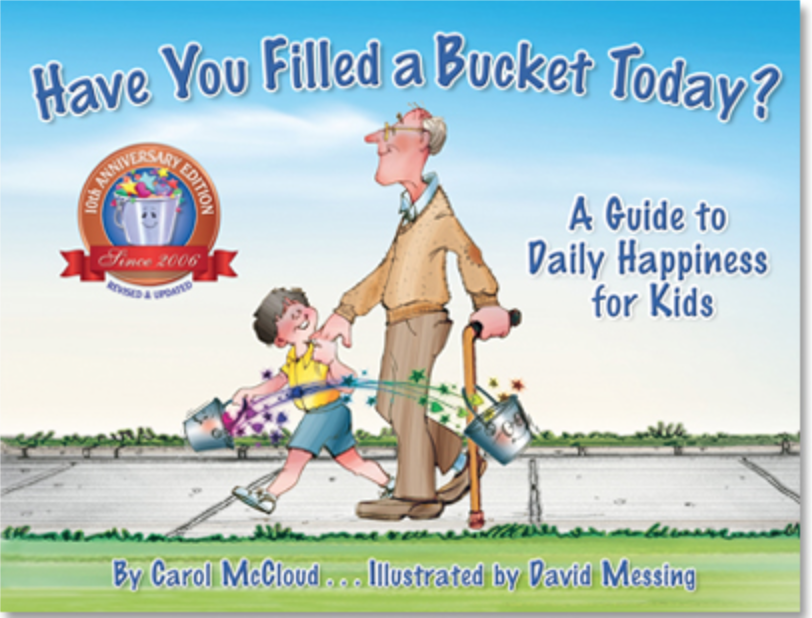
      At school, our PBIS committee (thanks to the guidance of +Shianne Gillespie) is helping our students "Catch Kindness" in February.  All classrooms read a version of the bucket filler book, and now they have a bucket on their door to catch hearts when a student is caught being kind to someone else.  If we introduce empathy with this activity, we just need to think about our language when giving out a heart, or perhaps when deciding when to give a heart.  Sometimes, I have seen classes get hearts for whole class behavior.  If we really look at this as an opportunity to name and recognize kids being empathetic and kind to each other, then our students will see that we value each other and that kindness matters.  


     Empathy is the ability to understand and share the feelings of another person.  It's kids knowing that other people exist in their world, too, and they need to be aware of other people's feelings.  This is how our kindergarten teacher, Rita Tameling, chose to introduce this idea to her students.


     She had them name the behaviors that would fill a bucket, like being kind to others, and helping people, complimenting others, sharing, playing with everyone, etc.  They also identified bucket dippers, like teasing, not sharing, being mean, tattling, pushing, hitting, etc.  In reality, the moment a child decides to fill a bucket or dip into a bucket is probably dependent on whether they have empathy (and self-control) or not.  If they have an awareness of the feelings of others, they will be bucket fillers more often. 

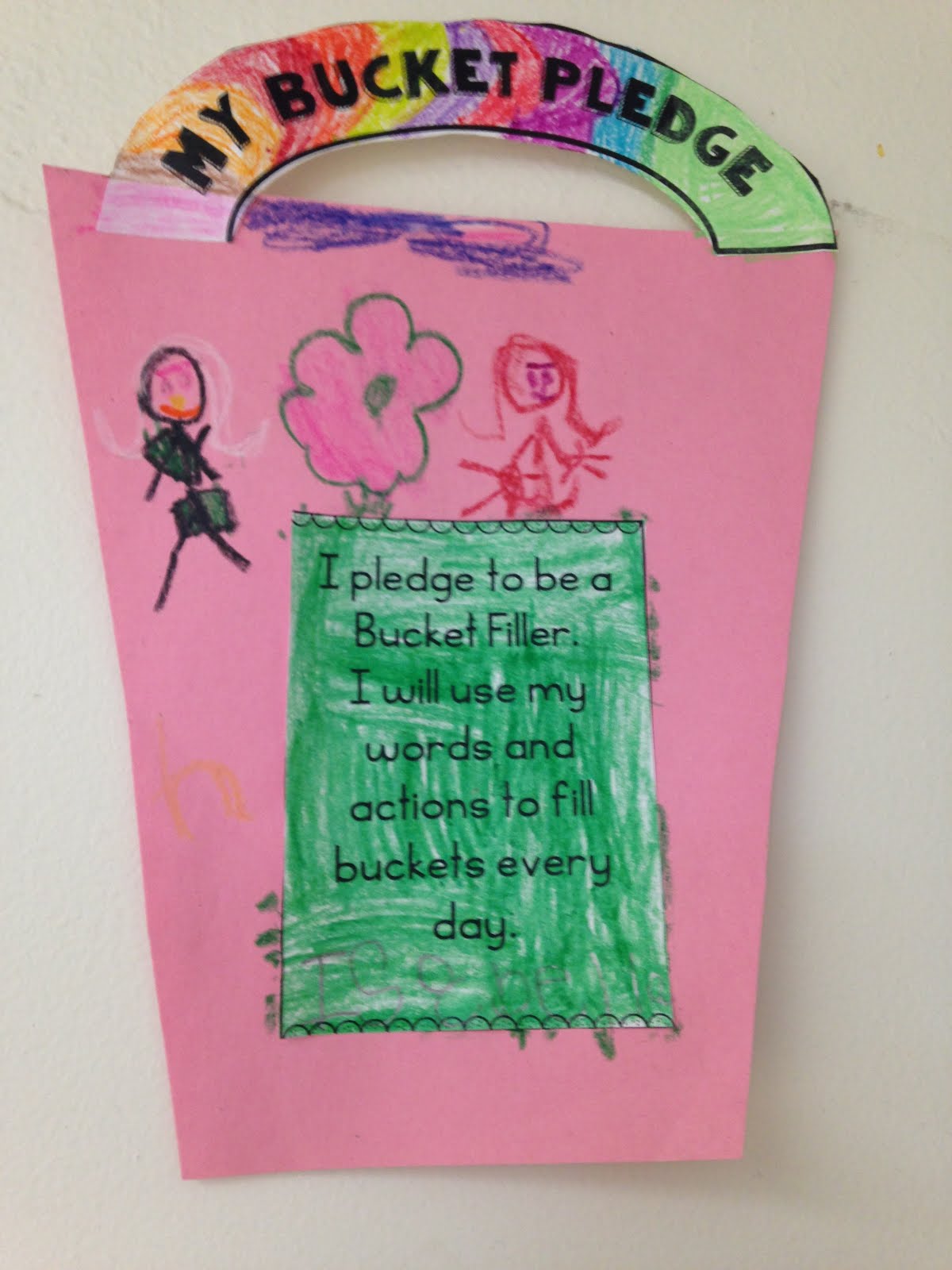
      How can you get your students to be more aware?  Ms. Tameling had them start with a personal pledge to be a bucket filler!  Reciting that pledge at morning meeting, or whenever a heart is put into the class bucket, or anytime someone starts to dip into a bucket, would be a great way to use the pledge on the path to empathy.  :)


     Here is our one sheet for empathy this week.  


Ok, Hiawatha!  Let's explore EMPATHY!  #hiawathapride

How does your classroom embrace empathy?  
How do students show empathy?

How are we using the rest of the mindsets with empathy?

Next week, we will explore how we continue to develop mindsets after they have all been introduced.  This is a looooooong game.  The development of mindsets takes time.   More on that next week!


Resilience (Mindset #4)

Saturday, February 6, 2016

     For the last 4 weeks, we have been using the ideas from A Mindset for Learning to promote the mindsets of optimism, persistence, flexibility, resilience, and empathy at Hiawatha School.  Check out these posts to read more about the mindsets, or look through #hiawathapride on Twitter.


This week's mindset is an important one.  

Resilience: The ability to bounce back and recover from setbacks or failures.
When you have trouble, you bounce back and try again.


Here is our One Sheet for the week, and the whole file where you can find the other mindsets.

     Resilient people who fail don't usually give up.  They bounce back and recover from disappointment.  They usually try again, and are able to have persistence in a task.   Often, they have different ways that they can try to try again because they see things with flexibility.  But, what makes they try again in the first place? What do they get back up and try again?  In my opinion, it is having optimism and realistic beliefs in the first place that allows them to be resilient.

     If you believe you can do something, and you have a realistic goal, it is much easier to have resilience in the face of challenge or failure.  

                                   
     Take this famous quote by Yoda, for example.  When kids read it, they often think that Yoda means that you should just be able to do something and get it done the first time.

"Do or do not.  There is no try."

But, when you watch the video clip and see the quote in context, it takes on a different meaning.

Taking Luke Skywalker out of the conversation, you have: 

"So certain are you.  Always with you it cannot be done.
{It's} Only different in your mind.  You must unlearn what you have learned.
Do, or do not.  There is no try."

     If, in your mind, you don't believe that you can actually accomplish the task (optimism) you are way more unlikely to show flexibility and persistence in achieving it.  It is harder to have resilience when you don't believe in yourself.  Thanks, Master Yoda, for reminding us of that.

     Resilience is not something that our students need just when solving a math problem.  The truth is, the real world is filled with challenges for our kids.  Especially as they grow a little older and they become aware of the world outside of themselves, it can be harder and harder to be resilient.  Many times, they don't have control over their situations because they are kids.  But, they could have control over their mindsets, and the ability to bounce back even in the midst of struggles.  Take this scene from Inside Out, for example.  
(Thanks, +Tyler Haar for comparing the movie to Crenshaw today.  This scene can totally be watched after reading a few of the chapters in Crenshaw to compare and contrast resilience!)


     Another example that could be used with students is the resilience that athletes have when they compete.  They may fall, but always get up.  There are many athletes, like Michael Jordan, who could be used to teach that bouncing back from struggle can lead to success.  I really like this video, though, because it shows an Olympic runner who fell and got up, but didn't win the race.  Resilience doesn't mean that we always WIN.  It means that we keep going despite the obstacles and challenges ahead of us.


Test your own resilience!  Ask yourself:
How quickly do we recover when we get to our destination late?
Or burn dinner?
Or get lost?
Or lose our cell phone?
Do we rebound in a few minutes, or is the whole day lost?
How quickly do we bounce back?

     Beach Balls have resilience!  In the book, Mraz and Hertz talk about how Ginsburg and Jablow (2011) use a beach ball as a metaphor for resilience.  Beach balls float on the water.  Now matter how far down you push it, it always comes back to the surface.  It bounces back and recovers quickly.  If you click on this link, you can see my son and I test it out in our bathtub.  


     How do we do this in a classroom?  We should develop resiliency in a climate that supports it and models it.  This is not a mindset that we can just name, and expect them to learn.  My son learned the word pretty quickly, and was using it in the video in just three minutes.  But, he doesn't HAVE resilience because he name it. We need to have an classroom environment that models risk taking, and learning from mistakes, and celebrating the learning process over the product.  


Ok, Hiawatha!  Let's explore RESILIENCE!  #hiawathapride

How does your classroom embrace resilience?  
How do students show resilience?
How are we using the rest of the mindsets with resilience?


Move Your Bus: #D100BloggerPD with Ginny Burdett

Friday, February 5, 2016

MOVE YOUR BUS #D100BloggerPD BOOK STUDY: CH. 6 & 7


This post in the #D100BloggerPD series is written by the wonderful Ginny Burdett.  
She is a 4th grade teacher at Hiawatha School.  

@MissBurdettHIA
Click on the circles as they appear to go to all the posts in our book study!

  Welcome back to the Move Your Bus book study, hosted by the #D100bloggerPD clan! Being a part of the innovative district that I am, I have welcomed the opportunity to be part of the #D100BloggerPD book study. Here’s how it works: every Monday, Wednesday, and Friday in February, a different #D100bloggerPD member will post a new blog reflection from Ron Clark’s “Move Your Bus.” You have a couple of options; you can choose to follow the above schedule and click on the circles, search the #D100bloggerPD hashtag on Twitter, or keep up with Colleen’s blog for the newest link. We encourage you to jump right in and come along for the ride!

  Within the introduction to Part II: How to Accelerate, it states, “Are you a runner? Do you want to be? No matter how fast you’re currently moving, I believe unequivocally that the desire to run in within us all.” Clark then goes on to say that if you want to accelerate, regardless of whatever role you play, start HERE. Both Chapter 6 “Get There Early,” and Chapter 7 “Wear Your Good Clothes” mention consistent habits or behaviors that most runners have in common. Essentially, this next section of Move Your Bus is a road map for your acceleration journey. 

Chapter 6- Get There Early

  Mr. Clark began the chapter by mentioning that if you aren’t quite a runner (YET #growthmindset), the last thing you want to do is get in the way of those who are. He suggests that whenever you are committed to attending a meeting, (my teacher mind immediately thinks 1:1, team planning, RTI, building, leadership and/or district meetings), you want to attempt to be one of the first attendees present. He goes on to say that those runners will most likely already be there early. It is imperative to avoid showing up late, because it shows that you 1. don’t respect the purpose of the meeting, and 2. don’t value your colleagues’ time. 

  Think about it. If you know that a meeting won’t actually get started until 15 minutes after it’s designated time, you may be tempted to show up 5-10 minutes late. I certainly have had that mindset before…as Clark says, a runner’s time is valuable. Why show up on time, knowing that you’re only going to sit around waiting for the rest of the attendees to trickle in when you could be doing something more productive with that time? Ron says “Don’t do it. Don’t become one of those people who are stealing valuable minutes from other team members.”

Now let’s shift this discussion from arriving to meetings early… to arriving to school early.


     I happen to be the epitome of Cinderella in the above picture. I easily wake up at 4:45 a.m and am in my classroom by 6:45 a.m. Every day. With a genuine smile smacked on my face. In my old district, I was given the nickname “Ginny Sunshine” because I was one of those annoying morning people. I get it. Ron Clark gets it. Some of us are just not morning people. If you find yourself managing to make it to work on time, but know that it would be impossible to get there any earlier, you need to make an obligation to stay past your expected time if you want to see any sign of acceleration. Clark feels that you need to show that you have a solid work ethic and that you are willing and capable of putting in the extra time in order to increase performance. Deliberately planning to arrive before or stay after your expected time will allow you to develop a reputation as someone who hits the ground running.

Chapter 7- Wear Your Good Clothes


  Chapter 7 brought me right back onto UIC’s quad, my freshmen year of college. I can remember one of my good friends trying to calm down my nerves about my upcoming final exam. He looked at me and said, “Ginny, listen. My teacher used to tell us this: Look good, feel good. feel good, do good. Just dress the part, elude confidence, and the rest will come.”

  Look good, feel good. Feel good, do good essentially sums up Mr. Clark’s Chapter 7 “Wear Your Good Clothes” in 8 short words. As the driver of RCA, he requires all staff members to wear suits or business attire every single day of the school year. His theory behind “no dress down days” is simply stated…RCA staff members’ performance is never dressed down. Don’t allow your work ethic to run, while your outfit rides. If you want to run, you have to look and dress the part. If you look good, you will feel good. When you feel good, you will perform better. It’s all about what you do and how you look doing it. 

  This next part of Chapter 7 though…you guys. I couldn’t have been assigned a more perfect chapter. Along the same lines of wearing your good clothes, comes presenting your work space well. MY FAVORITE (if you know me, you can probably hear me singing “my favoriteeeee!”). Mr. Clark feels that keeping your workplace clean is something that contributes to an overall successful environment. Whether you realize it or not, the neatness of your classroom means a lot to those around you. You may not mind a messy desk, scraps of paper left on the floor, or out-dated documents hanging on the wall…but trust me, it bothers others. Keep it clean (and if you need help getting started, find me. Organizing and cleaning spaces gives me a natural high). After all, no one wants to ride on a messy bus. 

  I saw this while blog-hopping, and felt the need to repost for giggles. You can thank me by joining #D100bloggerPD on Monday, February 8th. Michelle, over at Big Time Literacy, will be hosting chapters 8 - 10! Enjoy!


Flexibility (Mindset #3)

Sunday, January 31, 2016


Last week we focused on Persistence, with a review on Optimism.  Click here for our One Sheet on optimism and the One Sheet on persistence.

This week, we are introducing FlexibilityHere is the One Sheet for flexibility.  There are also poster in that link, with graphics thanks to Ashley Hughes.

All of this mindset work is, of course, inspired by the work of Kristine Mraz and Christine Hertz and their book:

When someone is flexible, they know that there in not one way of doing something.  They often persevere through a challenge and show persistence because they see that there are tools available to them to try.  I like to think about this as the many ways I could get to work each morning.  If there is a traffic back up, there are many routes I can take.  It might not be my favorite route, but having those  options gives me the flexibly to get to work when there is a road block.  

One special thing about people who think with flexibility is their ability to change their minds when they are given new information.  They can reassess the problem and think about how they are solving it, and change directions.  This is critical to problem solving.  

What does that mean for our students?  Perhaps things like:
Knowing a book is too hard, and seeing the options to solve or support that.
Using our CAFE Boards, knowing that those options are choices for readers to make and apply.  
Knowing that they can't figure out how to subtract the numbers, and finding tools to help them.
Struggling with a difficult assignment, and using a few strategies to help from getting stuck.

Costa and Kallick (2000) describe flexible thinkers as people who can see from more that one perspective.  They can see from their own perspective, another's perspective, a bird's eye view, and a worm's eye view.  This ability to change perspective and see things in more than one way helps them come up with different paths to solve the same problem.

So, what about a pig's eye perspective?


Our second grade teachers were introducing their fairy tale unit this week, and they decided to do it with a little STEAM.  (I think their end products were works of ART, so I added the A.)  


All four classes used flexibility in their materials and how they tested the houses as "wolf proof."   But, they basically all had their students use materials to build houses that would withstand the huffing and puffing of the Big, Bad Wolf.  Watching them create the houses showed their persistence and flexibility at times of challenge.  Marshmallows can be a finicky building material, and straw (whether the plastic or plant kind) is not the easiest material to manipulate.  Some homes were pretty flat, and others had walls to protect their pigs.  But, ALL students showed persistence in the task and built a house!  A few of the classes then had them rotate to a different set of building materials, showing them how different tools make the process different.  Flexibility in action!


At the end, I caught +Erin Flynn's class discuss how they were persistent while building.  The kids said things like, "The sticks were easy because they were pointy" or "The straws were hard, because they fell down when you stacked them."  One said, "It was just gross and sticky, but I did it anyway." Another said, "I tried the same things over and over again" (referring to those tricky straws).  Their teacher responded with: 
"I didn't see a single one of you giving up!  You kept trying it again and didn't give up!"
Now, how often can we honestly say that about a lesson?

                              
Isn't that great?  I love the idea of teaching these mindsets in situations like this!  Low stress, creative challenges that allow kids to experience the real struggles and successes that we feel in life.  Plus, it ties directly to their study on the Three Little Pigs.  
Kids who struggle with a book might just close it.  
Kids who struggle with building a toothpick house might think more flexibly and choose a new strategy.  
Perhaps this is where we need to teach that type of thinking, and reinforce, scaffold, and celebrate transfer to academic struggle. 

Thanks +Stacy Rammer +Margaret Daly +Erin Flynn +Stephany Berryhill and +Claudia Scott for starting your new unit of study in such a dynamic way.

Want one more pig's eye view on flexibility?  Watch Ormie the Pig use flexibility and persistence to get the cookies at the top of the fridge.  +Lori Horne showed me this video a few years ago, and I always seem to find a new way to use it.  


Ok, Hiawatha!  Let's explore FLEXIBILITY!  #hiawathapride

How does your classroom embrace flexibility?  
How do students show flexibility?
How do you see flexibility, optimism and persistence 
working together in your class?


Voices of Inspiration

Thursday, January 28, 2016


This is the last post in the #D100BloggerPD challenge about what inspires us.  If you missed any, please click on the ThingLink below to catch up!

Thanks +Kristin Richey  and +Colleen Noffsinger  for organizing us on this journey.


What inspires me?
I have really struggled with this question, for a few reasons.  First of all, this blog is filled with posts about things that inspire me, from music to people to authors.  Many things have inspired me at various times in my life.  Coming up with ONE source of inspiration was just too hard.

Over the course of a week, I started generating a list:
My kids.  Quotes.  Photographs.  Books.  Authors.  People.  Song lyrics.  Students.  Teachers.  More people.  Rainbows.

I started to see a trend in most of those things. Words.  What do the words, or message, communicated by them have in common?  I spoke to a friend on the phone, and she said those words are like "voices of hope."  I realized that "Voices of..." seemed to work, but I wasn't sure hope was all encompassing enough.


I went into a teacher's classroom as lunch, because her mom had brought her McDonald's and I wanted to steal a few fries.  I turned to a small thoughtful group of educators and said, "What do the voices of song lyrics, good quotes, people like MLK, and our own staff have in common? Hope? Joy? Caring? Optimism?" One of the teachers talked about a story that had moved her to tears about when the Dream Act was passed.  I showed them a music video that inspires me.  Tears flowed. It was then, over a chicken nugget, that she said, "Why not just voices of inspiration?"


I am inspired by people who inspire others.


Kindergartners whose hopes and dreams are for others to dream.  Selfless and kind, right from the start.


People who believe in the beauty of a better tomorrow, and start down the path to it.  People who lead others down the path, too, or help people create their own path.


Songs that have lyrics that remind us to be a better person.  The world turns with our light.  There is universal beauty in being humble and kind and respectful and human to all people.


Movies that show us empowerment,  strength and courage are in our own control.  We have the power to make a difference in our own lives, and the lives of others.


Coworkers and literacy gurus who push me to be the best educator that I can be with their words and ideas and passion.  Their support is a blessing that propels me forward.


Books and book characters that show us that the dark and the light are within us all, but that light can win.  Love and hope can be our motivation if we let it.


My family, who are my voice of everything.

Somos los soñadores.
We are the dreamers.

We can dream beautiful things, and make those dreams come true. We are the ones who can see beauty in the world, and create more beauty in this world.
We can be voices of inspiration for others.

Be that voice.
Maybe you will be my next voice of inspiration.  :)


Persistence (Mindset #2)

Sunday, January 24, 2016


Last week we focused on Optimism.  Click here for our One Sheet, based on the work of Mraz and Hertz.  The book is phenomenal.


This week, we are going to show Persistence!  Here is the One Sheet.

Being persistent is a mindset that will help our students work through challenge.  It is so much easier to give up when things get hard.  I know when I try to parallel park, if I do decide to try, I give it one go, get embarrassed, and pull away in defeat.  Clearly, being persistent is not always as easy as we hope.

I think it is really important to mention that we need to put kids in situations where we tell them to be persistent when they actually can succeed.  They need to know that challenge can be worked through, and feel the success on the other side.  It reminds me of those "grit" lessons that some grade levels did earlier in the year during reading workshop.  It is good to teach a child to be persistent through a book that they can read, but provides some reasonable struggle.  It's another thing to hand them a book 2 years above their reading level and with no interest level there and tell them "Be persistent!"  Trying again and again, in this case, will only lead to frustration and failure.

Because of this, I really think that the mindset of persistence should be taught in a low stress, less academic way if we can.  We want to teach children that they shouldn't give up at the first sign of struggle, and to keep going even when it is a little hard, but we don't want them spinning wheels in the mud either.

I think a lovely mentor text for persistence is Float, by Daniel Miyares.  It is actually a wordless picture book, and it just arrived at my house today!  Perhaps I am looking at things through the lens of persistence today, but I see the mindset in this book.  It is a story about a boy who makes a newspaper boat.


The endpapers of the book alone could teach persistence.  As a second grade teachers for 15 years, there were so many kids who would see directions like this for paper crafting and just hand me the paper and ask me to "help."  Meaning, do it for me Mrs. O'Donnell.  When I would say, "Just try!" they'd walk over to the kid in the class who was a paper plane making expert.  Clearly, I missed some lessons on persistence back then.

The boy in the story does succeed in making a boat, with dad's help perhaps, and goes off to sail it.  Despite drizzle, then rain, then losing it downstream, the boy still ends up with his boat in the end, even if it isn't the way he had hoped it would end.  But, he dries himself off, and starts the next day off with a new newspaper craft.  


I actually love how optimism and persistence run through this book.  Throughout the rain, he wears a bright yellow raincoat and boots that jump off the page.  It could be just because traditional raincoats are yellow.  But, at the end, the sun comes out and the boy, in gray, is surrounded by the same yellow of the sun as he runs off to play again with his newest creation.  That, to me, is use of color to show optimism.  His boat is gone, but his plane will soar.  This is great, because the mindsets can work together in real life, too.

If you want to borrow this book, feel free!  It is a wordless book, so we can chat about how you would "read" it to your class if you'd like.  If you end up having your class follow the endpapers and persist in making paper airplanes at the end, then make sure you take a picture and tweet it using #hiawathapride!

Ok, Hiawatha!  Let's explore PERSISTENCE!  #hiawathapride

How does your classroom embrace persistence?  
How do students show persistence?